Sunday, October 20, 2013

HARB - Pros and Cons

What is your experience with, or thoughts regarding, Historic Architectural Review Boards?  I have limited direct experience with them personally, but have heard and read and indirectly experienced several different perspectives.

Lately, my thoughts have been that they are a positive feature of a community, because in my own community there has been a lot of discussion about possibly forming an Historic District, which is exciting to me.  In my mind, the HARB would consist of passionate and compassionate board members who have knowledge for and unbiased appreciation of the local historic architecture.

A recent discussion with a colleague who is very much anti-HARB made me realize that what I imagine and what actually comes to fruition with the boards are not one in the same.

Ideally, HARB would guide and educate property-owners in the maintenance and aesthetics of their properties.  However, what more often seems to be the case is HARB becomes another money-grab hoop that designers, owners and builders have to jump through, and to perhaps an ineffectual end.

After listening to my colleague's argument and reflecting on the stories cataloged in my brain, I have to say that HARB is a great idea in theory, but it is poorly executed in practice.

What do you think about HARB?  What are your pros and cons?

Pro

  • Maintenance of neighborhood character
  • Guidance for property-owners on creating historically accurate improvements

Con
  • Board members may or may not have the expertise to offer actual guidance
  • Board members may have very finite or subjective grounds for approval
  • The owner's added cost of preparing for HARB reviews and permitting

Thursday, October 3, 2013

Some last minute stops before we're lost at sea again.

So now that my grad school thesis is turned in I decided to reward myself in the dorkiest way possible: by going to visit museums. The cockney man I love was not able to come with me so it was kind of interesting getting involved in London's history spots without someone I can ask a bevy of questions to.
 
Questions like: "Is marmite an actual food or is used just for torture?" or "Do people in England really think that Ben Franklin was a serial killer?" But here we go:
 
Stop 1) The Handel Museum


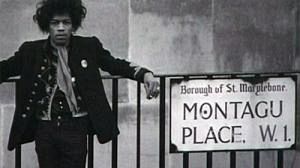
Did you know that Jimmy Hendrix and Handel lived in the same row home in west London? Because I didn't. And honestly, that is kind of the only architectural interest of this house. Not to be dismissive to the museum, or it's staff, who were lovely. But unless you're super into Hanoverians, Harpsichords or dope-ass wigs. It's a row-home that has a very nice open spaces and a flat in the attic. I'd skip it. Though the restaurant in the little courtyard out back is nice.


Stop 2) The Dickens Museum


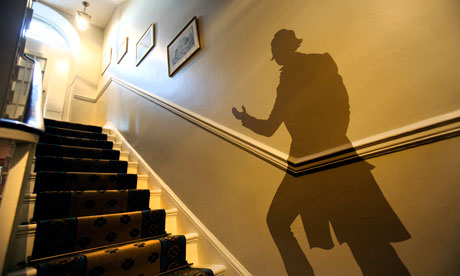
The Dickens Museum on the other hand is much more interesting and maybe because as a person, Dickens is just more interesting. Handel was incredibly private but Dickens may have been the human equivalent of a Chihuahua high on cocaine: the dude had some energy.  The house itself is what a respectable Victorian home should be, and for that, it's interesting. It's lush, but compact, pretentious but not insincere. As someone who only recently started to get into cooking I can state that the kitchens were fascinating, particularly the sinks which seemed to have been a huge piece of stone carved into the shape of a utility sink.
 
Yet what I liked best about this museum was that it felt like the home that a writer would live in. It was comfortable but bright. Secluded but not isolated. It was the home of someone who works from home.
 
Off-topic: he was not cool to his wife. but then again she was loopy on drugs. also kind of dumb. Seriously look it up. Somebody hit a mid-life crisis wall hard.


SPEAKING OF WIVES!!!! 
 
Stop 3) Hampton Court Palace
 
 
 This was a place I had been dying to get to all year but like going the post-office, I hadn't found time. Well not anymore. Instead I took the noon train from Waterloo to Kingston-Upon-Thames. If one had been part of Henry VIII's court one would have taken a boat there (or back depending on if you were going to get your head cut off). But I'm rabble at best, so it's public transport for this kid.
 
The story of Hampton court is actually a tale of two buildings. The first one being the Renaissance Palace of a certain Cardinal Wolsey who had both sense and power, but not quiet enough as it would turn out. The other being Christopher Wren's palace for William and Mary on the other side. Both are really interesting in their aesthetics mostly because they're doing the same thing: promoting pleasure.
 
Henry the VIII's pleasure was grand, open air dining, dancing and spectacle. Sexy ladies and their scandalous French hoods. mrrrowww.
 
William of Orange's pleasure was a quiet evening and a good book, maybe a meal with a few good friends. He was a homebody.
 
And the layouts reflect this. The original Hampton Court is open and solid the addition is quiet and delicate.
 
However, more than anything else it feels like a palace. The only comparison I can think of at this scale is, rather uncreatively, Versailles. But Versailles is a consistent design plan. ALL of it feels ostentatious and dictated by strict protocol, and it all boils down to the king as an other-worldly creation.  This is not to say that Hampton Court lacks that sense of force of personality, but that the personalities there are not as exacting in what they want their design to be. If Versailles is an exacting and coordinated dance, then Hampton Court is a waltz. It's got rules, but they're pretty easy to follow.
 
Maybe this has something to do with the inconsistencies of power for both of the main residents. Henry had only come to the throne because his father had beaten Richard III, William only had it because he married a nice girl who didn't have any brothers. (Not to mention both he and his wife had the ghost of Charles I haunting their every move). Versailles is absolutely sure that their power is unending, Hampton Court wants to prove that they are powerful in the here and now.


Though I think my favorite part of the whole palace was the influence of Henry's Wives or as I call them:
 
- Catherine "Everyone Forgets I'm a Blonde" of Aragon
- Anne "My milkshake brings all the boys to the yard" Boleyn
- Jane "Something in Sheep's Clothing" Seymour
- Anne "It's what's on the inside that counts" of Cleeves
- Katherine "Pics or it didn't happen" Howard
- Catherine "Just get me out of here" Parr
 
Ahhh Henry, you may have been a horrible monster but you were never boring.

Wednesday, August 14, 2013

NCARB Certificate

I just wanted to share some timeline information with you.  My initial license (in PA) was issued at the end of May.  I just received in the mail today my NCARB certificate.  I don't recall the date on it, but I remember the letter that accompanied it was dated August 12.  Anyway, so for those of you working towards initial licensure, there are some milestone type figures for you!

Monday, July 15, 2013

"You're Gonna Miss Me When I'm Gone" - France Adventures Part II

So skedaddling south, we find ourselves in Marseilles. Strange, but somehow like able Marseilles.

I had been to Marseilles once before and I'd be lying if I said that I loved every minute of it in 2011.

For the full survey - read here - Marseilles - 2011

 Marseilles, in a simplistic way, is a bizarro-land version of Paris. The architecture is reminiscent of a sort of second-empire, kind-of neoclassical that seems synonymous with the boulevard but with all the grandeur surgically removed. Marseilles is neither the center of the world, but neither is it completely obscure. It is, after all, the second largest city in France. However, there is something about the city that is both incredibly French and completely not. It is not the beret-wearing, french-bread-toting, bicycle-riding France that was made famous in movies like Sabrina or anything starring Maurice Chevalier. No, this is the France of Dumas, a revenge seeking, almost north-African setting which has a certain sun-drenched, slightly menacing feeling. Like a card game with people you don't know: the interaction could go either way.

A great description of Marseilles as it was (and a little bit of how it is now) can be found in the writings of Walter Benjamin, particularly 'On Hashish'.

Walter Benjamin - On Hashish


I highly recommend reading this with a scotch and cigar because minor vices are the bread and butter of such writing. But I digress.

BUILDINGS!

If you read my previous post on Marseilles you will be able to tell that

1) I thought the Zaha Building was at least interesting

2) I was not all that impressed with the Unite D'Habitation

To quote Willy Wonka

"Wait a minute. Strike that. Reverse it."

1) The Zaha building does feel like something out of the not-too distant future, in the sense that is not something that belongs in Marseilles. Upon second analysis, the structure feels like something that was conceived in a studio in London (after someone spent a weekend in Marseilles) and in no way relates to anything doing with the micro culture of the city. One of my colleagues who seems to have dedicated her life to hating Hadid's plan for Istanbul could not say enough bad things about the building, and for the most part, yeah. There are a lot of problems with it, though I stick by my assessment that to ignore it, is to ignore it on purpose.


2) Ok, so to be clear, I'm not ready to drink the Kool-aid on all Le Corbusier buildings yet, but when I first saw the Unite, it was as someone passing through: This time I got to stay there and it made all the difference. The genius of the Unite is in the sections and the details. Each unit is, relatively, pretty small but they don't feel so. The steps are done in such a way that a baby's hands could crawl up stair unassisted. There is a drop-box for staples (Bread, Milk, Cheese) that one can order from the store on the mid-floor. It feels like the kind of place that a child would want to grow up. Which makes sense, given it the design's post-war intentions. 


What I was wrong about before is the notion of subtlety. Where the Zaha building is indeed striking, what it is not is particularly clever. If we are to compare these two buildings (which we shouldn't necessarily do, as they are completely different programs but ehh...) it is a battle of 'Shock and Awe' vs 'Indie Cred', Britney Spears vs Bon Iver. Corporate vs Hipster, with all the obnoxious associations that connect those notions.

Which brings up our next topic. The European Capital of Culture.

'The European Capital of Culture' is an honor that has been created to promote cities in the EU which maybe have been ignored in the past, cities that are not necessarily on your typical tourist route. Some examples of previous years include: Porto, Salamanca, Lille, Liverpool, Turku, Cork & Bruges.

This designation results in various urbanization projects and in the case of Marseilles one might relate the followings buildings.

- Vieux Port by Norman Foster


- MuCEM Museum of European and Mediterranean Civilisations) by Rudy Ricciotti


- Villa Méditerranée by Stefano Boeri


Each of these buildings feel particular of this age and intent, which means that it may be a little too early to tell how these buildings are going to age. I could give my thoughts, but if Marseilles has taught me anything, it is that jumping too quickly to conclusions and opinions can result often in having to jump back from them. But for the sake of it:

- Like.
- Like.
- Meh.

As the end of the trip drew near, I was excited to return to London, even with it's miserable weather and soot. This feeling was somewhat deterred when I was almost vomited on when the tube reached the Covent Garden Station. (Which is what I get for being on the tube at 11:59 on a Friday). Upon my east-London flat, my counterpart went in for a hug and in a moment of hesitation, asked what happened on my journey: "People" I replied hopelessly. "And Buildings" which was when the smile returned. Then I took a shower with that regionally appropriate soap that dries your skin and dreamed of warmer weather.  

Friday, July 5, 2013

Complimentary NCARB Certification

Hi there.  I just wanted to post what I did not realize was an added bonus to getting your initial license.  NCARB offers complimentary certificates after you get your first license.  I thought I would have to apply and submit the appropriate fees, which was a major deterrent after already dropping like $2k on exams, extensions and applications and such.

Though I am not certain if I will ever need to be licensed in other jurisdictions, and therefore maintain my NCARB certificate every year, I won't say no to a free one now!  I think it expires late in 2014.  Maybe some doors will open between now and then that will make it a seemingly wise investment.  I have heard both sides of it - it's a waste of money, or it is the best investment you can make in your career (after licensure, exams, etc. etc.).

Any thoughts?  For now I will use the NCARB acronym in my email signature but that is about all I will be getting out of it for now!

Friday, June 28, 2013

One for you, one for youtube.

So I realize that I haven't shared like, any videos of my sorted adventures. Let's fix that now.

Tate Modern - London

 
Hills in Derbyshire

Lyme House, Derbyshire

Chatsworth House Picture Gallery

Kedleston Hall Ballroom

Edinburgh Castle View

 
Dunnottar Castle - Exterior

Dunnottar Castle - Interior

For me, for me, for me, formidable


I have just returned from the south of France and man does London weather look downright miserable in comparison. Now granted, I am not adept at warm temperatures. In fact, anytime it gets about 80 I start fearing for immediate implosion, but after several months of what seems to be the perpetual mid-November weather of England, a Mediterranean trip could not be turned down. Our first stop was Lyon, which is in the southern central part of France and home to some of my favorite street art. Including one which told me (in English) that : "Life is too short for soft porn". Thanks. Gross.

But what I found most interesting in Lyon were the three following places:


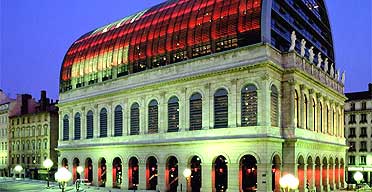
 1) Jean Nouvel's extension of the Lyon Opera House -  I liked it, for whatever that's worth. It's trying to be epic and sophisticated but in a contemporary fashion. Much like the loud break-dancing teenagers outside the opera house, it's an attempt at taking something historic and making it contemporary. Though the real success is how it meets the public space adjacent to it.


2) Le Village de Etats Unis (and corresponding murals) - This odd area of the city was designed almost entirely by Tony Garnier, and as such has an almost Utopian feel to it. Originally this was built, as the name implies, for Americans who had served in WWI, built between the years of 1920 and 1935, as affordable housing it's a remembrance of its time. Both beautiful and just a little off.


3) Halle Tony Garnier - You may be able to guess who designed this one. Sadly we couldn't go inside, but the exterior was quite lovely. In fact, I would venture to say it is the nicest slaughterhouse I've ever been to. TAKE THAT SMITHFIELD MARKETS!

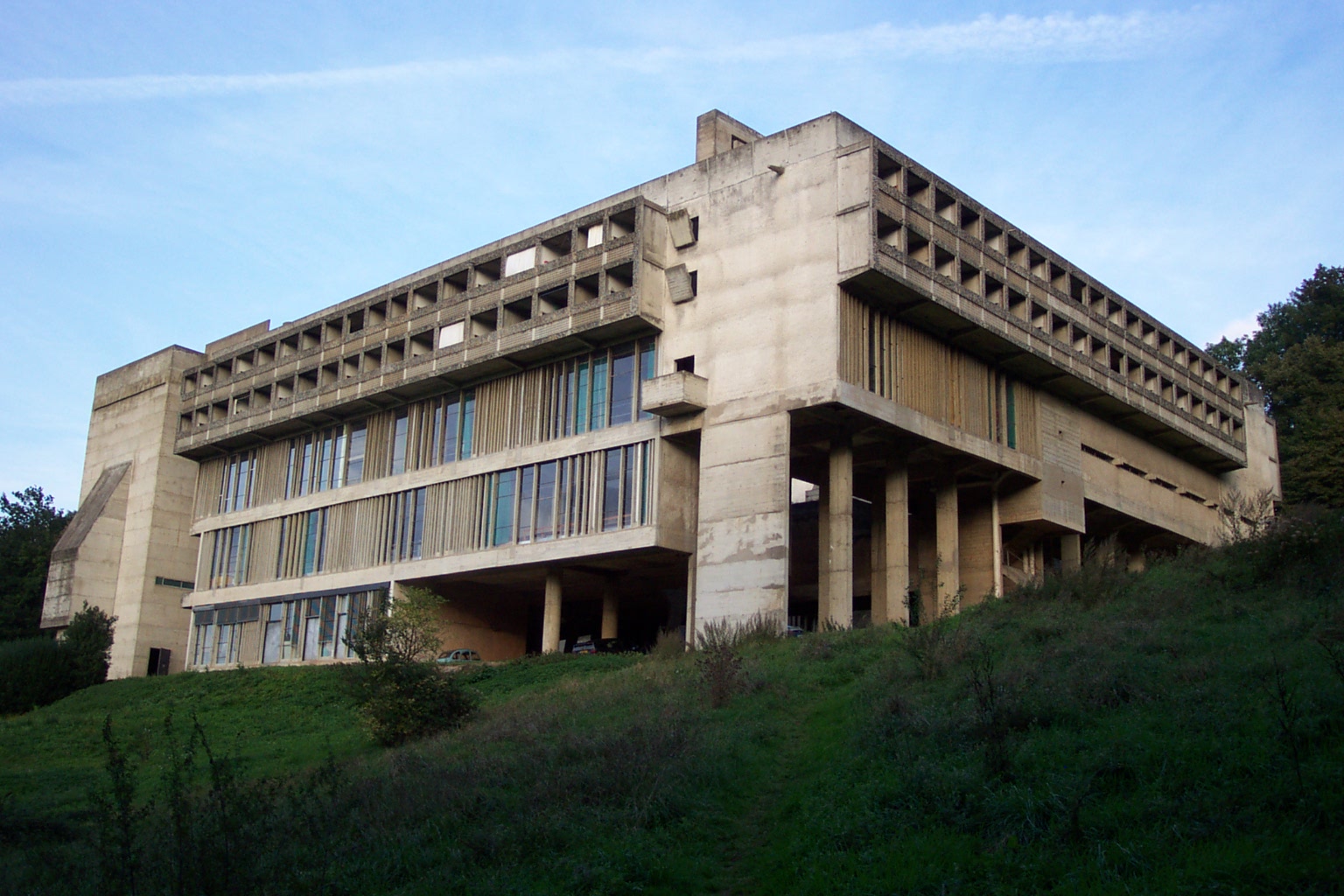
After we left Lyon we made our way to La Tourette, or more formally, 'Sainte Marie de La Tourette'. Which is a Dominican monastery outside of Lyon, about 30 min by car. If you're reading this blog, I'm making a general assumption that you are aware of Le Corbusier and his subsequent effect on architecture both modern and contemporary. But for me personally, I always hated the work of Le Corbusier. I know that's blasphemy, but we're being honest here. For years I thought his work was enormously over-rated and, as little as it matters in the grand scheme of architecture, ugly. This ugliness comes from what I perceived as a lazy style of baton brut, clumsy forms and ideas which are overly political for someone who finds himself 'convieniently Swiss' every time a war breaks out. He may have had Sigfried Gideon and Colin Rowe in his pocket (which are indeed, pretty good gets), but not me.


Though I always found my hatred of this ugliness to be contradictory, I mean I loved (and still do love) Robert Venturi's work, and that is about as ugly as ugly gets. Why then so much Corb-hate? I suppose it's because I saw it as claiming to be more than it is, the product of a really good spin artist and a figure just arrogant and articulate enough to be believable. That is until I saw La Tourette. Cliche as it sounds, I think the monastery may have started to make a believer out of me. Do I think it's my favorite building of all time? No. Not even close. But being there, walking around, staying in one of the cells, I get it. There are theorists who believe that Le Corbusier's work was done in such a manner to make it more photogenic. I'm going to have to disagree. In photos La Tourette looks like a massive, miserable block of a building. Solid, impenetrable, unfeeling. But I guess what I never realized, not fully anyway, is just how hollow and empty the courtyard of the building seems to be, how green, how, well, peaceful. It should be noted that just about a 2 min walk away from the entrance of La Tourette is a graveyard. As the woman who runs the monastery stated 'it's a wonderful place to be deceased' and yeah, in a weird way, you feel almost like a ghost in La Tourette. It feels ancient, and you are merely the earth-bound shell of blood and bone holding, like a egg in a nest, a soul which emerges, fully formed upon your death. Or maybe that's the wine talking. Either way, it was better than I expected.


Though the skylights sticking out of the chapel are stupid looking from the exterior. That I'm never going to change my mind on.


The next step was the provincial town of Arles. Arles is the kind of place that you feel a Diane Lane movie should be set. You know the one I'm talking about, like a middle-aged woman moves to a small town in Europe after her crippling divorce to discover herself and along the way meets a gardener or like a mechanic or a wine merchant or whatever who teaches her to love again.

As a side note, I'm going to list words I hate that are used in movies such as this:

- Sensual
- Lover
- Wit and Wisdom (together, the words are perfectly fine apart)
- Rediscovering herself

Ugh - kill me.

However, to the best of my knowledge Lifetime has never actally filmed a movie in Arles, so I allowed myself the freedom to like it. And it is, really, really charming. Maybe it was the sun, maybe it was the entire pizza I ate by myself, but the connection of provincial, ancient and accessible just gets me every time. Sometimes I suspect that going to these places as an American means that you're going to see these places differently. In the US if there are 'charming winding streets' they are usually artificial and conceived of a Richard Sennett inspired urbanist, which is fine, by the way. But there is a kind of obsolete usefulness to these streets, like stubbornly using a type writer from the 1920s, even if the damn thing barely works. They have problems, they're not practical, but what can I say? Oh, let's just let 1990s Meg Ryan do it for me?


Stay tuned for next time when we talk about Marseilles, Unite D'habitation and various other sundries.