Showing posts with label frank lloyd wright. Show all posts

Saturday, January 24, 2015

You might even like being together, and if you don't, it won't be forever

So as the course of true-love never did run smooth: the position I'm in now is a contract, and as with all contracts, eventually it has to end. Will this mean I return to the world of architectural theory full time, or stick with my 50/50 relationship with a continuation? Only time will tell. However, I feel like I should take this time to bring up two completely unrelated things that have been swirling around in my brain as of late.

#1) The reason why I think Architectural Theory is important:

For years I've been told "Architectural Theory isn't real architecture". Which, I understand as a statement, but don't really get. Like, alright, Theory has nothing to do with line weights (unless you are writing the most esoteric thesis ever) or construction schedules (unless you count Violet Le-Duc). But what it does, what is really does is allow people to have a conversation about design which doesn't put the past on a pedestal. It takes architecture out of the feeling one might have towards a museum piece: to be viewed with appreciation and nothing else. Theory allows for educated, legitimate rejection of selfish work. A conversation.

Dadaism's form of modernism has made it so "ugly" isn't a credible argument against architecture. What Theory does is create a language which can allow for a nuanced understanding of:

A) What architecture is
B) What architects do

Sometimes I think my personal interest in this field comes from the sake of always hating Frank Lloyd Wright's kitchens. I've ranted about his kitchens before, but I'll do so again because it illustrates my point. FLW was a genius, but he was also a dude who never cooked a day in his life. From childhood on, he either had a woman or a professional chef cooking for him. He had no clue whatsoever how much space is needed to cook a turkey and it shows. But the mythos of Wright is so strong the assumption that everything he did was flawless is almost cannon. What flaws he has are boiled down to his personal life, which, to me, is just a variation on a theme. He was bullying to women who bored him, so he made spaces that just reinforce the idea that "cool women" are only cool because they act like men.  He wanted a Jeffersonian utopia but only one where everything looked like an etch-a-sketch print-out and everyone was square-jawed with middle-class aspirations. Before theory, I don't think I would have had the chops, or the cojones to come out and say the most scandalous statement I can imagine for architects : Frank Lloyd Wright is ok.

Be rebellious. Hate something dexterously. Read Theory.

#2) The Secret Legacy of C.B.J. Snyder 

Speaking of old white dudes, C.B.J Snyder is highly underrated. He oversaw the construction of over 400 schools in New York City with most of his buildings still standing, many now classified as NYC landmarks. He made revolutionary strides in children's welfare in school space, HVAC and promoting public education. Charismatic and likable, he was elected to the school board by an almost unanimous vote. 

There's a care to his buildings, a uniformity which was clearly created with the best of intentions. High ceilings, classrooms that are usually 28' by 22', clerestory windows into the hallways and lovely entrances. Further, he arranged that the air conditioning would be adjacent, if not directly through the closets, which meant by the time the children had to go home, their (often) wool coats would be dry. 

There are some things that are bizarre in his work though. For instance, in some of the high-schools there are "boy's gyms" and "girl's gyms", but only locker rooms/showers for the boys. Presumably this is because girls weren't going to get physical enough to work up a sweat? Or some belief that women are shocked by nakedness, even among each other? Or maybe there was something there about clothing for women being more difficult to take off. Who knows, could be any or all of those reasons.

In either case, check out his work. As it stands, I may write a blog post soon about the history of public school buildings. There's an interesting history there, one that is influenced deeply by politics, even today.  

That's it from New York - over to you Pennsylvania!

Wednesday, March 28, 2012

There and Back Again: A Hobbit's Tale. By Miley Cyrus

After a long winter in a somewhat dreary east coast town, (no hate Baltimore, just fact), I was ready for a mini-vacation. So I hitched up the old frequent flyer miles and visited a friend in Los Angeles. To quote a woman who is truly the voice of our age, and will, I'm sure, be an inspiration to all in her wake.

"I hopped off the plane at LAX
With a dream and my cardigan
Welcome to the land of fame excess (Whoa), am I gonna fit in?

Jumped in the cab here I am for the first time
Look to my right and I see the Hollywood sign
This is all so crazy, everybody seems so famous"

But seriously.

What is it about California, LA in particular, that represents such a fantasy, such an optimism, such suspicion?

The specifics of the culture were identifiable in literature by such figures as Jack London, Amy Tan, Mark Twain, John Steinbeck, and Aldous Huxley. Of course, if we want to be topical, we can also look at its' influence on fictional figures, like Don Draper, who see it as a gleaming example of hope and nostalgia wrapped in a neat package.

In many ways, California is microcosm of how the United States presents itself, which make sense, as much of our media (or propaganda if you want to use a loaded word) is produced.

The assessment is as such: California, like America, has the following traits:

- Optimistic
- Clever
- Brave
- Heartfelt
- Curious
- Adventuresome
- Idealistic
- Charming

It also has the faults of being:

- Shallow
- Self-hating
- Youth-Obsessed
- Narcissistic
- Overly Competitive
- Arrogant
- Egotistical
- Ridiculous

The architecture of Los Angeles, much like the literature, reflects this fascinating paradox. Let's look at some examples, shall we?

Part I: You can always go home, it just can't be yours.

While I was in LA, three people became the center of my residential focus. That is, The Eames and John Lautner.

Charles and Ray were a couple the likes of which are enviable. Charles began his career in steel and was entranced by Scandinavian modernity, Ray was a sophisticated artist and designer who could more than keep up with her husband. Where Charles could envision the space, Ray could make it come alive.


In their work, there is the pursuit of a better kind of life through what the west has to offer, that is, open space. Case Study House #8 is a great example.

Though it took longer for the materials to arrive then it did to assemble everything (several years vs. two days), The Eames were forever figuring out how their home would be arranged. This process is extremely different from Frank Lloyd Wright or Le Corbusier, who had very strict ideas as to how their spaces were going to be lived in.

Charles and Ray were continually deciding what would be in the grand living room. This room serves as garden, library and tea room all at once. The search for reinvention and change physically manifests itself while loving the landscape. Originally the plan was to have the house stand over the meadow that it is now adjacent to. The Eames moved this back in order to better preserve what they loved about the space, the openness.

Dominating the landscape makes sense in say, Fallingwater, where the effect is dramatic, or (though I have yet to see it in person) the Farnsworth house, where the look is one of delicate removal, but in something as (dare I say it) fun as the Eames house, it would look a little pompous.

For videos of this house, see the previous post


On the other hand is John Lautner, who can do a lot more name dropping with his LA homes, as they have appeared in tons of movies.


(Ok that last one is different. but next time you watch it, check out Jackie Treehorn's pad)

John Lautner, believed in nature, much like the Eames. However, while the Eames were steeped in a mixture of DeStijl and Bauhaus traditions, Lautner was a zealous disciple of Frank Lloyd Wright. In addition to this, he was a promoter of the Gaia Movement's dogma of "Organic Architecture". The commandments of which are:

"Let the design:

be inspired by nature and be sustainable, healthy, conserving, and diverse.
unfold, like an organism, from the seed within.
exist in the "continuous present" and "begin again and again".
follow the flows and be flexible and adaptable.
satisfy social, physical, and spiritual needs.
"grow out of the site" and be unique.
celebrate the spirit of youth, play and surprise.
express the rhythm of music and the power of dance."

Specific, yet open to interpretation.

Lautner both loves and controls the nature of his homes. The palm trees are dynamic, but do not overshadow the sharp edges of the concrete. There is also the glass, always with the glass.

Lautner's architecture became popular a little bit later than the Eames and visually you can tell. The Eames seem to be a 1950s-early 60s dream, while Lautner has more grander, something that seems unmistakably late 60s-70s.

So, where the Eames Case Study houses seem like the humble experiments of a kindly couple out in the woods.


Lautner's designs are how can we put this? Sexier. They just ooze money, sophistication and a sultry kind of power.


To sum it up: you want to marry the Eames Designs, but have an affair with the Lautner Designs.

These three designers were a product of their respective times yet simultaneously a reaction to the core cultures of LA, which are in short: a dependence of cars, modernity and convenience. These three things more than anything else lead to what? Say it with me folks. Pollution. So they straddle the needs of their modern life with a reverence for nature. Like a more moral kind of Petit Trianon.

There are a number of other great homes in LA, designed by the likes of Greene & Greene, Schindler, Neutra, Wright, but for the sake of time. We'll move on.

An example of a few more can be found here

Part II: Uptown v. Downtown: The Public Buildings Strike Back

There are a lot of great museums in LA. In particular I like the MOCA and LACMA

However, there are two rival buildings which have high visual concepts.

Firstly to divert from our path, I love the architectural debates going on right now. They're complicated. Studying older architectural history, there is a chronological order to how things go, a natural progression. German Cathedrals are different from Italian ones, and for very specific reasons. They also take decades, if not centuries to build, so most of the time there is less personal vision.

Currently, there are so many requirements and agendas happening at the same time that it creates greater challenges for architects, and I believe more often than not, fascinating results.

The computer allows architects to put a ton of personality into their work, which means that when you're buying a design, you're buying an architect. The viewpoint included. So it is with that we look at the following two designs.

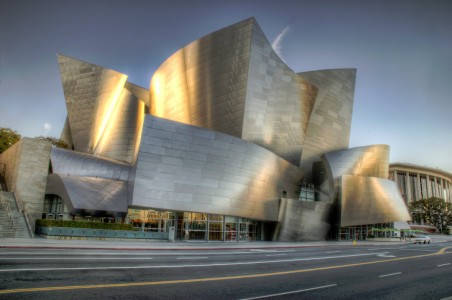
The Getty Center and the Walt Disney Concert Hall.


The Getty Center was designed by Richard Meier, a rationalist architect who is part of that boy band known as "The New York Five". The Getty, like much of Meier's work has this sense of formality to it. When you get there, you have arrived. The best example of this is when I was reading the map and misread the title page.

It listed the "Arrival Court" however I saw it as "Arriving at Court" and I think it accurately summed up the feeling.

The museum design invokes the Parthenon, both in its layout of the individual structures and the procession and walk through process that it orchestrates. Meier is saying "you don't HAVE to, but you should do it this way". The museum is much like the collection, a few break out stars, a lot of pretty good and nothing uninteresting.

What you get the most of in this design, besides the view, is the texture. Soft to hard, delicate to rough, steel to stone, it's a mastery of what the material can do. I've given Meier a hard time in the past, mostly for his work at the Ara Pacis.

However, that work represented the "Californication" of Europe. We're in LA now baby, and here it just makes sense.

Also, it should be noted I arrived on the one day, it seems ever, it was raining at the Getty. They were kind enough to give you an umbrella as you get off the tram, which was thoughtful, but did present a huge design flaw.

Next we have the Walt Disney Concert Hall which, like the Getty, is dramatic and charming. But it is there the similarities end.


Where Meier is considered one of the elites, seemingly bred for a sleek kind of architecture by the all-powerful Philip Johnson, Gehry is someone with whom you just fall in love. He's the underdog, the one you want to believe in, if we want to be cliche about it... the Hollywood story.

By his own testimony:

“I was a truck driver in L.A., going to City College, and I tried radio announcing, which I wasn't very good at. I tried chemical engineering, which I wasn't very good at and didn't like, and then I remembered. You know, somehow I just started racking my brain about, "What do I like?" Where was I? What made me excited? And I remembered art, that I loved going to museums and I loved looking at paintings, loved listening to music. Those things came from my mother, who took me to concerts and museums. I remembered Grandma and the blocks, and just on a hunch, I tried some architecture classes.”

Now that may seem romantic, but when you look at the WDCH, you get it. Where the Getty is an implied progression from space to space, the Concert Hall is an exploration of the nooks and crannies that the curves create.

However, it is not without it's critics. Let's get real for a moment, It's a mess of a building with angles and curves everywhere that don't make any sense. THEY JUST DON'T.


Or do they?


They make sense if you think like a painter or a sculpture. It's not just about the space or the program, it's about the mere shock of it all. Like walking in on an enormous painting.

It's got that "Wow" Factor. That nothingness that is tangible and unobtainable, like charm without the smarm, with goodness without condescension, so hard to achieve yet instantly recognizable.

At the Getty, you are a pilgrim to worship the art. At the WDCH you're a spelunker there to discover it. Some would argue that is the nature of the art you are there to see, visual vs. acoustic, but that may be taking it too literally.

Part III: The Greening

We can't end this post without talking about the green elephant in the room, which is of course, Sustainability. California, more than anywhere else in the US is obsessed with the environmental aspects of it's construction. For good reason.

The basic infrastructure of LA is counter intuitive to everything the green movement stands for. (Just watch the end of 'Who Framed Roger Rabbit'.) You need a car. You just do. The shining kind of optimism that makes the area so appealing is the exact same thing that makes it unsustainable. So, with all the sincerity of a born again convict, LA is interested in health and the environment.

Maybe it's because I'm a cynical Easterner with a heart of coal who is impatient, rude, and demanding but I can't understand a city without a public transit system that works well (and I lived in Philadelphia).

What you need is a rail system, a good one. What you have are highways and a tourist line. Will installing it be a pain in the butt? Yes. You need it. Think of it as "having some work done."

It should be noted they're working on the Metro solution, but the TBDs leave one a little nervous.

Coming soon to a Metropolitan area near you

Finally, because we talked so much about the future past, enjoy one of my favorites:


Also, a special thanks to my hosts. They were lovely and charming.
You can catch their webseries here:

CouchSurfersTV

Monday, January 10, 2011

Love Letters to Dead Architects: I may not always love you, but I will always have loved you now.

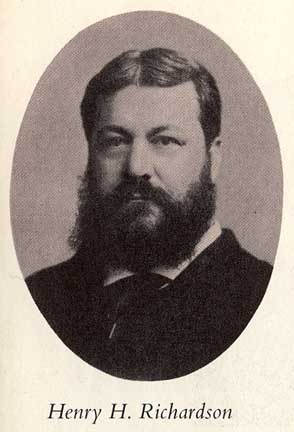
Dear Henry Hobson Richardson,

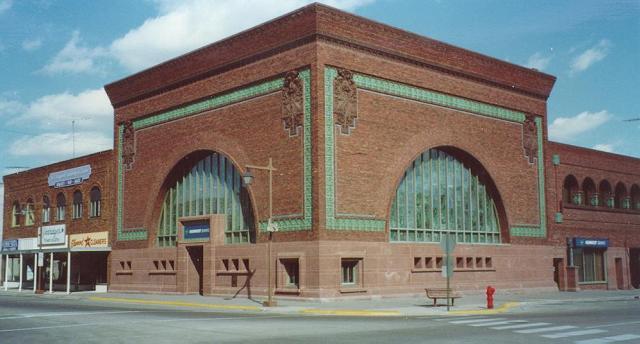
You, sir, have changed the landscape. Suddenly everything Romantic is passionate once again, no longer the dilapidated or the sad. No more the cold textures of neo classical, not more the spindly witches’ fingers of the neo gothic. No, now we have something ruddy, rough, real and dare I say? Sexy. I mean the arch at the Old Colony Railroad Station? Hot.

Still though, why must America always play homage to Europe? You have broken the first link, getting in with the boys at the Beaux, learning their secrets and changing them to fit your means. But still, why are we continuing to fear the disapproval of our disowned parents?

Just keep kicking it Ecole Vieux. You know, like you do.

With love,

Retly Corm

Dear Pietro Di Cortona,

Don’t let the emotional babies over at the Caravaggisti Camp get you down. They say hurtful things about everyone. They think it makes them cool. Don’t get me started.

So what if you like something light and decorative. Meat and Potatoes may be enough for them, but if you can have something more, why not? Put a loggia next to a garden if it makes you happy. Gently curve an arch, gilt your bronze, just go nuts.

Who does it hurt if you immerse the walls with trompe l’oiel and pastels? They look nice and this is Italy for God’s sake. Whatever you do though, don’t let the French Monarchs get a hold of it; you know that they are going to blow that whole business way out of proportion.

Listen, the Caravaggisti may have that “tortured bad-boy” routine down pact, but their days are numbered. Why? They don’t know they lack a sustainable client.

A rose will always have had barbs, even when they are gone.
Rome will always have a Barberini, even when they disappear.

With Love,

Retly Corm

Louis Sullivan,

You know how much I hate passive-aggressive notes. Would you please stop leaving them around this house?

Now, I understand the counter-intuitive nature of writing a letter to tell you to stop writing notes, so just save us both time and don’t comment on it.

You and I both know what this is really about. You’re upset about the White City. You’re tired of the neo-classical nonsense that seems to be everywhere. They claim it is perfect, clear, logical and of Course you know better. I would feel upset for you, but I spoke to Daniel Burnham. He said you were given a chance to reject the scheme and said nothing.

If “Form Follows Function” should not Action Follow Virtue?

How about some straightforward honesty for once? Don’t retreat if you think it will be unpopular, if you’re going to change the world, you can never apologize.

AND DON’T YOU DARE SHOW THIS TO FRANK LLOYD WRIGHT! THIS DOES NOT CONCERN HIM! FRANK IF YOU ARE READING THIS, YOU ARE IN SO MUCH TROUBLE.

With Love,

Retly Corm

Tuesday, December 21, 2010

Love Letters to Dead Architects: Without You, Summer is like Winter and Winter Is Even Worse.

Dear Francesco Borromini,

I hope you know it’s not as bad as it seems. Sure, you’re a frumpy, whiney, smelly, poor kid, but you’ve got something that Bernini will never have: CHARACTER. Bernini is like that guy in high-school who never had to go through an awkward phase and therefore all of his friends are dicks and he has, like, no personality.

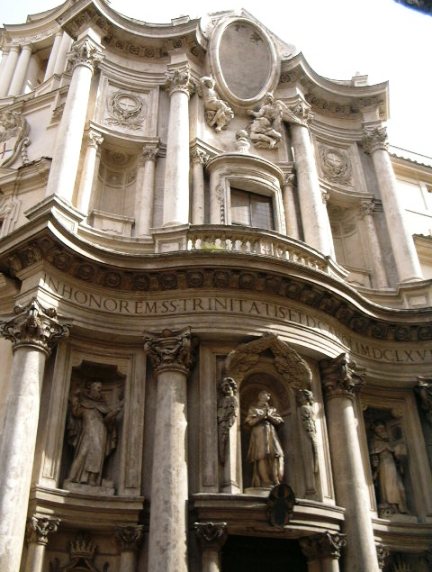
But you Mini, (its ok if I call you Mini right? I’m just going to do it anyway) you understand things that Bernini never will, things like how advanced geometry is more organic than simplistic Vitruvian forms and have a greater capacity for light and shape. Or that Vatican Hill is structurally unsound and can’t support ridiculously large bell-towers. You don’t need those phonies; you’re not part of their system because you’re your own man. Bernini will get his; he’s been stealing your ideas for years and claiming them as their own. First there was the Baldachino which was so unfair and don’t get me started on San Carlo alle Quattro Fontane and Church of Saint Andrew's at the Quirinal. I mean that was just blatant.

Remember that I believe in you. You can change the world. That is, if you can get over this obsession you have with Bernini. Just let him go, you’re better than that. And whatever you do, DO NOT impale yourself on a sword to prove a point. You did that when you were 14 with that pencil, it didn’t work then and it won’t work now.

I love you,

Retly Corm.

My Dear Kenzo Tange,

A valiant attempt. Yes, it was I who took out Team X and you, understandably so, sought me out for revenge. You almost had it too, but I’m afraid the sushi restaurant was just a red herring. Which as it turns out, they serve there too.

It’s time for me to hide somewhere sunny and remote. Don’t try and follow me, there will come a time when I’m sure we will meet again, but you’re not ready. Not yet anyway.

In the mean time, discover your country and yourself through a new kind of architecture. You have a tragic and unique opportunity to become the phoenix that rises from the ashes. Embrace those elements of the architectural character that defined your nation and forget the rest. Put your mind away from retribution and put it towards evolution. I know you have the skill, heart, discipline and determination to do this. Trust me, you belong in Japan.

Never forget your past, but don’t dwell on that you cannot change. Team X is gone, but you can make something better, something meta.

Kiss with a fist,

Retly Corm


Dear Henry Van De Velde,

I understand why you had to go, but why didn’t you take me with you? I would have gone, if you had asked.

You may not have thought so, but you did belong here, at the Deutche Werkbund. The only person who cared about you not being German was you.

If it weren’t for you, none of the work could have been possible. You, who would stand up to Hermann Muthesius when no one else could. You, who got the designers and engineers to get over themselves and collaborate. You, who fought for the importance of individual input in mass production as opposed to collective anonymity, you were everything to them…and to me.

I never told you, I should have, I know that now.

Maybe you will read this and feel the same way about me. Maybe you’ll remember our late nights and early mornings in the studio. Maybe someday you’ll return.

However, if you do, you will find me like the Werkbund, ever the same and irretrievably changed.

Yours, in this moment, forever,

Retly Corm


My Dear Mnesicles,

We can never undo what has happened. However, I know, that while the war that inspired your work will effect your friends, enemies, family, etc. etc. forever, no one will remember that.

They will remember your arch at the Acropolis.

Oh my love, the things it will see and the things that will see it. Your creations is like a life itself, perfect in conception, always looking to please, loved and abused by humanity and nature, bitter, forgiving, tired, democratic, exclusive and better for the experience.

Its heart will beat like a hammer when all that’s left of man are myths and names in sand that was once concrete.

Be mnine,

Retly Corm


Dear Frank Lloyd Wright,

This has got to stop. I can’t be around you. Not now. Not Ever.
Admit it, we’re basically ‘enemies with benefits’.
I hate talking to you, you hate listening to me and we can’t get enough of each other.
It doesn’t make sense and it can’t last.

Yes, your attention to detail is second to none and by designing via additive form instead of a solid whole, you have revolutionized the field. Not to mention rejecting exclusively euro-centric design concepts could not be hotter. BUT! Could you be more obnoxious about it? I submit not.

My biggest problem is that you keep putting women up on this (#1) ridiculous #2) unfair) pedestal. The world does not revolve around you Frank, and maybe, just maybe women don’t actually want to serve/service you 24 hours a day. I know it sounds absurd, but maybe they want to be somewhere that’s not a kitchen or, my favorite, chained to a desk.

That’s right; I’m talking straight up Johnson Wax Building. What was that? Seriously.

You’re a genius. I get it. That doesn’t mean you can be a total schlong.

I’m leaving and I’m not going to miss you. Don’t pretend to be hurt, I know you can’t stand me either.

Never Really Yours,

Retly Corm

Thursday, August 12, 2010

Philip Johnson Comics


For some reason the full comic was not loading - so follow the link here for the meeting of FLW and P.J.

Wednesday, May 19, 2010

The Architect in Fiction: Best Movie Ever

So I just finished reading “The Women” (T.C. Boyle) and re-reading “Loving Frank” (Nancy Horan) which prompts me to ask: is anybody else a little tired of biographies about Frank Lloyd Wright’s personal life involving his many, many affairs? I mean I think it’s one of those topics that everyone is interested in, but to a point.

Don’t get me wrong, I love FLW drama as much as the next person but can we cover any one of his other humanizing and interesting flaws, like the terrible business deals or the paranoia? In that light I bring you what I think would work much better.

Frank Lloyd Wright is a cowboy-samurai who kills his master (Played by Louis Sullivan) after they have a battle to prove his strength, he then beats up sides of beef in a meat in a meat locker, after which he takes on the Empire (Skidmore Owens and Merrill) in his mid-western arts and crafts style centennial falcon. The New Emporer (Phillip Johnson) sends his mute German assassin/bounty-hunter/rival (Mies Van De Rohe), they play a game of cat and also cat until a mysterious figure shoots the assassin in the back. It’s his master (an even angrier Louis Sullivan) they have a moment of dearest hate and confusing love before he walks away into the fog.

None of that really happened, but I think that would be a better story than hearing the same story over and over again from the perspective of the significantly less interesting figures in his life.

Sunday, May 9, 2010

Love Letters to Dead Architects: The Mata-Hari of Modernism

Dear Rudolph Schindler,

How ever did you survive the panther attack? I thought for certain I had found an acceptable means of eliminating my chief rival. I am impressed at your determination; you are much more dedicated than your counterpart: Richard Neutra.

As you know, Richard left me in a most cruel way in Vienna when he moved to the U.S. upon the insistence of Mr. FLLW. Luckily, I escaped to Italy before any real harm could be done, from there Paris, New York, Chicago and finally here.

Now, I have never much been one for idle gossip, but I heard through the California grape-vine that there is trouble in paradise between you, Frank and Dick. Something to do with you not being invited to Phillip Johnson’s latest International tea-party, the one EVERYONE else was invited to. Oh and wasn’t there something else about Richard claiming your work on Wright’s Imperial Hotel? You’ve got brains Rudy, what you lack is deftness, I can help you there. Be the Eris to my Mars, or the other way around, however you like.

I propose an alliance, you take out Wright and I’ll take Richard. I would take the Mid-westerner myself, but he would see that coming a mile away. He and I…well, the less said there the better.

If you agree with this arrangement, meet me at “The Pimento” in one hour and we’ll discuss logistics.

Yours,

Retly Corm


Dear Richard Nuetra,

If you’re reading this, then congratulations!

You’ve found my abandoned house. I left this morning, the drawings, the models, the miniature cyclonorama, they’re all gone.

And shame on you for coming around here like I owe you something. I OWE YOU NOTHING! YOU LEFT ME! Even Adolph Loos agreed with me that you were in the wrong and you know how he and I never see eye-to-mustache on anything.

There we were, having a perfectly marvelous romance and then BAM! You have to run off to California to “find yourself” with that wad Frank Lloyd Wright and your buddy Schindler. Did you ever once think of me, as you were lounging by your sharp, trendy pools in those sun-drenched valleys? Boozing it up with Ayn Rand in your fashionable 1920s patios?

No, you left me holding the bag in Vienna; do you know how those neo-classicists hunted me after you left? I couldn’t buy schnitzel without getting at least one t-square hurled in my general direction. Do you know what the worst part was? The WORST part was that you didn’t even say goodbye to my face. You left me a note. AN UNSIGNED NOTE.

I thought you might like this then scenario then, you always went on about the joys of irony. I know you better than you think. In fact, I know you so well that if my assumptions are correct and you are reading this letter at 2:34 in the afternoon on Thursday the 16th, you have approximately 15 seconds before the moat is electrified.

Good luck getting back sucka!

Friday, December 25, 2009

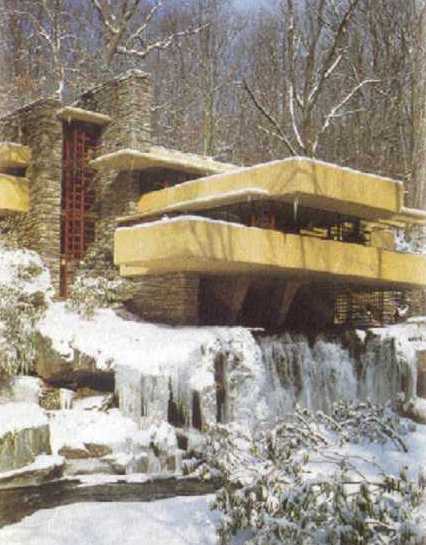
Fallingwater, with Falling Snow

 I shall finally post my comments and experience of my overdue first trip to Fallingwater.

To paint the scene, I am stationed in Maryland, a vacation house that sleeps 16, with my assorted maternal kin - there are about 14 of us.  8 folks signed up for the tour and were totally psyched about going, but only 6 of us ended up going... why, you ask?  Umm... snow.  It snowed like 5 inches in the 4 hours before we were destined to make our trip!  Nevertheless, those of us who fearlessly braved the slush had a frickin' blast!

I guess I didn't realize how huge the place was, in terms of square footage, with all the separate rooms.  The more private areas are definitely smaller feeling with the lower ceilings, but that's the idea - more intimacy...  I'm pretty much a big fan of every part of this house, save the hallways.  According to our guide, Frank L'Wright didn't believe people should linger in hallways - they are merely a vessel for getting from Room A to Room B.  I'm not sure I agree with that, but I reckon the shoe fits at Fallingwater.

I have to say, some of the highlights were the windows that opened up over the waterfall - I can see myself working in the room and opening the window to drown out the bustling brash of my cohabitants (I despise loud noises from other occupants).  I can also imagine myself falling asleep to the churning of the waterfall, despite it being loud.  I also loved that every room had a slender 5' foot or so high window in them.  And that they were operable - gotta love operable windows, fo' sho'.  I kind of like the idea of having a "sleeping room" and a "dressing room."  It would be nice to just have a totally isolated and specifically designated sleep space, to which you can retreat at the end of the day, knowing that you haven't junked it up during the course the day.

The only problem with our visit, was that it was probably 30º outside with freezing rain.  So I was just absolutely frigid and could not muster the strength to partake in the walk around the surrounding paths, or I believe it was called the "Nature Walk?"

Another bummer with the adventure was that we were unable to take photographs inside.  I wonder if we had purchased the extended tour would we be allowed to - they made it seem like such was the case on the website?

Anyway, I definitely think Fallingwater is a spectacular building, and you probably won't appreciate it as much until you visit it.  It's pretty remarkable the condition that it is in, particularly after the millions (or was it just over 1 million?) of visitors who have trekked through its rooms, ascended its stairs, and peered through its windows.  Oh, the balconies galore were pretty sick too.  I'm not sure I buy the idea of continuing the line of the furniture out onto the parapet - afterall that makes for a very precariously undersized guardrail - it looked like 18 inches!

Unfortunately I am a bit distracted by the assorted holiday activities abuzz around me, so this post may be a bit stream of consciousness and disjointed.  However, I am trying to get back into the swang of thangs!

I plan to do some biographical reading on some architecture/design-related folks, and make some posts on here about it.  Also there are probably some comments I can make since I am working in the field now.  Maybe I should do some sort of "fictional" story or plot line that develops as I have encounters in the workforce.

Anyway, I am sure I will find the occasion to make more compelling comments about Fallingwater in the future - for now, let this suffice!

Monday, November 9, 2009

Over the River and Through the Woods, to Louis Kahn's House We Go!

It was something like October 10th.  The Corm and I were desperate for architectural exploration, and a little fresh air.  We deduced an itinerary for the Chestnut Hill/Elkins Park/Germantown Ave area.  And then the journey began!

Although we were unable to secure entry to ANY of the architectural wonders we encountered that day, we did get up close and personal with them.  And I think that is much better than just reading about them or seeing someone else's photos.  Here are some thoughts about the various works we visited:

Baltimore Ohio Railroad Depot
Frank Furness
Flipping sweet.  This was built in 1886?  Get out.  I'm sure if we had made it inside we'd notice more signs of its age, but from the outside it looked pretty intact!  That's not to say the local Chestnut Hillians didn't sponsor some restoration, because that is so them, but it looks excellent.  The detailing was most pleasurable, the Cormster grabbed many a snapshot of the various intricacies of the project.  Why couldn't the East Falls train station be like this?

Venturi House
Robert Venturi (Bob)
I always pictured this building as light brown or tan, definitely not blue.  Maybe I've only seen older photos of it.  Anyway, it is definitely a unique one.  There is so much going on which you can really only get a sense of by creeping over the backyard fence.  With all the awkwardness on the exterior, I have a great curiosity about what sorts of architectural jests Bobby made on the interior.  The assortment of clerestory windows and interlocking masses gets me pretty excited.  I wonder how many 40, 50, 60-year old trick-or-treaters they got on Halloween... maybe we should have postponed our adventure 2 weeks for the perfect alibi to get a glimpse inside the houses!!!

Esherick House
Louis Kahn
Secluded on an elusive drive, the Esherick House presents a mysterious facade.  The graphic nature of the exterior's contrasting wood and concrete finishes makes it delightfully novel.  With a big-ass window and an ittby bitty balcony, I can picture some exquisite invite-only parties here.  I'm not sure if I agree with its current landscaping...

Beth Sholom Synagogue
Frank Lloyd Wright
I've been to this beast before, with my architectural history class, so although we were turned away on account of the Sabbath, I do have some recollection of the interior.  The strongest memory I have of the place is the 5 or so trash cans that were strategically placed throughout the seats and aisles to capture the rainwater trickling through the aging translucent panels.  I don't know how soon the roof began to leak after construction, but I do recall that it is too expensive to replace and that the panels were originally not yellow.  I think this was one of the earliest applications of these kind of panel system, so a more recent installation would prove less penetrable.  They always say Frank was ahead of his time.  Again with the detailing, this place is laden.  I haven't been to many synagogues, but I suspect this one (on a clear day) offers is congregation a very spiritual escape.  I remember that the sections and rows of seating were angled and sloped in such a way to give vast views of the central space.  You could make eye contact with other members of the congregation during the ceremony, without turning your head.  I thought this was pretty cool.  It is quite a deviation from my experience as a Catholic parishioner sitting in straight rows, facing forward.

to be continued...

Sunday, August 16, 2009

Busta Guggenheim-en

Too graphic?

Anyway, today was my first venture into the facility known as the Guggenheim New York. 'twas most appropriate as a first visit as the primary exhibition contained the life's work of a certain Mr. Frank Lloyd Wright. (More on him in a subsequent post.)

I will preface my observations by saying that I had first read about the exhibition in, perhaps it was June's, Architectural Record. In the issue were two articles, one intended to alert readers of the summer-long exhibition and one intended to critique it. The critique was pretty... harsh? To paraphrase, "the displays suck, the tables suck, the lighting sucks, even the name of the exhibition sucks. You can't ask a museum curator to understand architecture." Perhaps I dramatize. Additionally there was an article in a recent Metropolis magazine highlighting the exhibition, though the contents of the article were far less pointed.

In mine own observations, off the bat the "bowl" portion of the museum seemed small. I reckon in the glossies, there is always a tendency to convey a much larger space than as in actuality (I felt a similar volumetric letdown at the Jubilee Church by Meier). It was a little chaotic getting started - maybe I was just exhausted from my foot trek around NYC, or I was overwhelmed by the masses of people. The elevator was an implausible first step (huge ass line), and the stairs were fragmented - a couple flights here, a couple flights there. I imagine it would be a far more enchanting experience if it weren't for the humidity and swarms of tourists. Damn people, ruining architectural space.

Descending the ramp, I found the irregular slope to be somewhat uncomfortable. Maybe that's due to my positional sensitivity and proneness to vertigo. Like how I offer jabs and follow up with excuses? As the museum is round, it does seem impractical. How many paintings or artworks do you create on a curved medium? The way they rigged the drawings against the rounded outer wall had a rather adverse effect. It made an already darkened (from age) drawing difficult to read. I guess you can't shine light directly onto 90-year-old masterworks. Also the tables in the center of the floor were odd, though I'm not sure how else one would display items in that space. I think the various models were displayed quite nicely, however. That is, the ones that were head-height. Placing a fine-crafted model at waist height is somewhat of a... waste. Pun intended.

In conclusion, the building would be a much more comfortable experience without all the people congesting it. That's somewhat of a crummy sentiment when it comes to a public building. Then again, that's just me, and heaven knows I my designs have flaws.

As for the work contained within this great white beast, I found them most satisfying. I had hoped to see more residential projects, as far as I remember only Taliesin was the only one presented. Most of his presented works were "unbuilt." Though it was definitely righteous to check those out. It is possible I missed a side room that contained more of the smaller scale projects, but somehow I doubt it. I will also note that at several drawings I couldn't help but think, "man, if I showed up to a crit with this I'd get torn up." Not to say his drawings weren't beautiful, he tended to turn each one into a composition. But some of them, I could see a juror saying, "if that's how you're going to draw cars, you should just leave them out of it." or "are those figures to scale? They look disproportionate." Or "your inconsistent hatching is distracting." Again, dramatization.

Perhaps further comments will surface in the future, for now I am spent. 'twas a long hot day and I have exhaustion. I will conclude that I am super glad I finally got to the Guggenheim and that it was for this exhibition. I wonder if it is always as crowded as it was (we waited in line about 15 minutes for tickets).