Showing posts with label love letters to dead architects. Show all posts

Monday, July 15, 2013

"You're Gonna Miss Me When I'm Gone" - France Adventures Part II

So skedaddling south, we find ourselves in Marseilles. Strange, but somehow like able Marseilles.

I had been to Marseilles once before and I'd be lying if I said that I loved every minute of it in 2011.

For the full survey - read here - Marseilles - 2011

 Marseilles, in a simplistic way, is a bizarro-land version of Paris. The architecture is reminiscent of a sort of second-empire, kind-of neoclassical that seems synonymous with the boulevard but with all the grandeur surgically removed. Marseilles is neither the center of the world, but neither is it completely obscure. It is, after all, the second largest city in France. However, there is something about the city that is both incredibly French and completely not. It is not the beret-wearing, french-bread-toting, bicycle-riding France that was made famous in movies like Sabrina or anything starring Maurice Chevalier. No, this is the France of Dumas, a revenge seeking, almost north-African setting which has a certain sun-drenched, slightly menacing feeling. Like a card game with people you don't know: the interaction could go either way.

A great description of Marseilles as it was (and a little bit of how it is now) can be found in the writings of Walter Benjamin, particularly 'On Hashish'.

Walter Benjamin - On Hashish


I highly recommend reading this with a scotch and cigar because minor vices are the bread and butter of such writing. But I digress.

BUILDINGS!

If you read my previous post on Marseilles you will be able to tell that

1) I thought the Zaha Building was at least interesting

2) I was not all that impressed with the Unite D'Habitation

To quote Willy Wonka

"Wait a minute. Strike that. Reverse it."

1) The Zaha building does feel like something out of the not-too distant future, in the sense that is not something that belongs in Marseilles. Upon second analysis, the structure feels like something that was conceived in a studio in London (after someone spent a weekend in Marseilles) and in no way relates to anything doing with the micro culture of the city. One of my colleagues who seems to have dedicated her life to hating Hadid's plan for Istanbul could not say enough bad things about the building, and for the most part, yeah. There are a lot of problems with it, though I stick by my assessment that to ignore it, is to ignore it on purpose.


2) Ok, so to be clear, I'm not ready to drink the Kool-aid on all Le Corbusier buildings yet, but when I first saw the Unite, it was as someone passing through: This time I got to stay there and it made all the difference. The genius of the Unite is in the sections and the details. Each unit is, relatively, pretty small but they don't feel so. The steps are done in such a way that a baby's hands could crawl up stair unassisted. There is a drop-box for staples (Bread, Milk, Cheese) that one can order from the store on the mid-floor. It feels like the kind of place that a child would want to grow up. Which makes sense, given it the design's post-war intentions. 


What I was wrong about before is the notion of subtlety. Where the Zaha building is indeed striking, what it is not is particularly clever. If we are to compare these two buildings (which we shouldn't necessarily do, as they are completely different programs but ehh...) it is a battle of 'Shock and Awe' vs 'Indie Cred', Britney Spears vs Bon Iver. Corporate vs Hipster, with all the obnoxious associations that connect those notions.

Which brings up our next topic. The European Capital of Culture.

'The European Capital of Culture' is an honor that has been created to promote cities in the EU which maybe have been ignored in the past, cities that are not necessarily on your typical tourist route. Some examples of previous years include: Porto, Salamanca, Lille, Liverpool, Turku, Cork & Bruges.

This designation results in various urbanization projects and in the case of Marseilles one might relate the followings buildings.

- Vieux Port by Norman Foster


- MuCEM Museum of European and Mediterranean Civilisations) by Rudy Ricciotti


- Villa Méditerranée by Stefano Boeri


Each of these buildings feel particular of this age and intent, which means that it may be a little too early to tell how these buildings are going to age. I could give my thoughts, but if Marseilles has taught me anything, it is that jumping too quickly to conclusions and opinions can result often in having to jump back from them. But for the sake of it:

- Like.
- Like.
- Meh.

As the end of the trip drew near, I was excited to return to London, even with it's miserable weather and soot. This feeling was somewhat deterred when I was almost vomited on when the tube reached the Covent Garden Station. (Which is what I get for being on the tube at 11:59 on a Friday). Upon my east-London flat, my counterpart went in for a hug and in a moment of hesitation, asked what happened on my journey: "People" I replied hopelessly. "And Buildings" which was when the smile returned. Then I took a shower with that regionally appropriate soap that dries your skin and dreamed of warmer weather.  

Thursday, October 11, 2012

Love Letters to Dead Architects: I trust you, you got an honest face.

Dear Barthelemy Lafon,

What am I going to do with you? You're carousing all over New Orleans making a right nuisance of yourself: lurking around the Quarter and the Garden District, all man, all maneuvers and all mustache. Piracy! Smuggling! Bow ties!  Unbelievable!

Lucky for me, I'm not the type who gets all googlie-eyed at bad boys. At least not anymore.

Why did you did you do it Thomy? Was the humble charm of designing streets and bath-houses too lowly? Was the making of one of the strangest, most wonderful, most sublime cities in the world not enough to sate your appetites? You, the classicist scholar, you the philanthropist, you the man who saw past race at a time when it was not considered. So ahead of your time, yet stooping to petty lies and criminality. This is a grand and glorious disappointment.

Maybe I'll forget you move back north and flirt with some city folk, or maybe I'll become one of those great New Orleans eccentrics and wander the streets in a veil made of satin, weeping over a good man who was as bad, bad, bad as the darkest secrets on the hottest nights. The war made a lot of men and took a lot of men. I'm sorry to say that it took all the good out of the Barthelemy Lafon, at least the one I used to know.

Farewell,

Retly Corm

Dear Pope Sixtus V,

You know your Eminence, I'd be lying if I said that I'd never written one of these to a Pope before. Mama always told me not to lie to the leader of the Catholics, and I follow that advice. I gotta hand it to you, you're a man who knows marketing. Now I know what you'll say, that this great re-structuring of the Roman streets isn't for profit, it's for the glory of God and typically I'd think that was just lip-service, but I bet you really mean it.

See, your holiness, I've seen Popes before who claim to be holy, but really, they're just in it for the money and the power. *cough Alexander VI cough* What? Oh nothing. Just got some Borgia stuck in my throat.

Anyway, what I'm saying is that you saw a unique opportunity and took advantage of it. All of Europe is engulfed in a cataclysmic war, that is except Rome. So what do you do? You make Rome the #1 go-to site for all Catholics from everywhere. This may be anachronistic, but your Disney-land this town like none-other. It's smart. You make sure that every major church has a relic and that you can get from one to the other without a map. Then you build fountains and obelisks so the faithful, and maybe even the not-so, will gather around and use public spaces, bringing a sense of community. If the Reformationists want a battle of art and ideas, you give them the best you can give. Rome will Baroque the hell heck out of this time period. Bringing it Grottammare style.

Now, if only you could lay off the Inquisition and the whole Spanish Armada thing, we might actually have a decent Renaissance Papacy going. 

Best,

Retly Corm


Tuesday, June 26, 2012

New Orleans Trip Part II. The French Quarter: Like a rubber stamp that says " I just need one more chance"

Ahh the French Quarter, the backdrop of a hundred thousand mistakes and regrets. Stories of love, passion, revenge, salvation, murder, God, magic, monsters and everything in between, they all seem to play out so well on this unique background. It's no wonder that this particular section of New Orleans is a fountain of inspiration for artists of all sorts, but especially writers. The two best examples of the gold the French Quarter can produce are probably Tennessee Williams' ' A Streetcar Named Desire' and John Kennedy Toole's 'A Confederacy of Dunces' (we should note that a lot of the second book takes place on Canal St., which is technically not the French Quarter but.... meh.).

I don't want to spoil either book, but 'Dunces' can be summed up as:
'Oh Fortuna! Why hast thou spun me downward. My Boss hath told to stay out of trouble...so a RIOT I shall start.Oohhh...nevermind there are strippers..and birds..RIGHT HERE. This is awesome.'

While 'Desire' can be summed up thusly-


Also..you know..young Marlon Brando. You can watch him do anything. Eat a sandwich, channel surf, blink, whatever. 

Anyway ARCHITECTURE.

So how does one house this passion? The best answer is uniquely.

The French quarter has it's own architectural standards that have persevered through flood, fire, famine and riot. There are a few kinds we want to touch on briefly. The first is the 'Shotgun House'. A Shotgun is thus named because, hypothetically, you can shoot a from the backdoor and the bullet should come out the front.


While extremely simple, the shotgun house ingeniously mixes function and economy. The straight row of doors allow for a quick cross ventilation of the house and is a natural fit for the linear plots of land that the original plan of the French Quarter encouraged (see previous post). You also essentially have two porches, one for the front and one for the back. I like this as a poetic interpretation of what you show to the world and what you really are.

There are several versions of this style, double shotgun, semi-detached, etc. The nicer ones have a kind of Colonial/Victorian molding which make them look like sweetest old lady in the world lives there. How can she afford it? The cute brigade pays her to have pies cooled on windowsills year round.


The next we want to cover is the Creole Townhouse


Creole townhouses are interesting because they attempt to blend Spanish and French Styles. The walls are the stucco and brightly painted colors of the Caribbean Colonies while the structure is a French post-and-brick. This technique does not rely too heavily on one material or the other, as in this climate, both can be unreliable. (Brick can sink, wood can burn). You might also notice a large number of Mansard roofs on the Creole townhouses in addition to the traditional Spanish-slate hipped. Additionally, most have a wrought iron balcony (or two depending on the exterior) that has come to be associated with much more lewd behavior than I think the original intent implies, especially on Bourbon St.

The other noticeable feature is the floor plan. On the first floor you might have a multi-use space like a shop or bar, with the apartments on top. In the greater homes, it will simply be a grand parlor for entertaining.


 The interesting thing to note is how rarely the staircase is put out front and center. This is because only the closest guests are allowed upstairs. Along with the shotgun houses, we begin to see a pattern. The architecture implies a group of people who are easy to approach, but hard to know. Friendly and charming but also guarded and suspicious.


This changes when we are introduced to the "American Townhouses".

When the exotic northerners started congregating in New Orleans, they brought their northern ideas of townhomes with them. One idea was the somewhat strange notion (to them) that you would want main staircase to be a strong presence in your home. In colder climates this makes sense, as you are looking to condense space and expand fireplaces to retain heat. In a place like New Orleans, when it's so hot you feel like you are literally a walking ball of sweating lard, this makes less sense. However, fashion is as fashion does and the idea became popular.

Please note that the exterior of the houses stayed similar.

According to NOLA.gov, The Anglo-American Townhome can be also summed up thusly:

"These townhouses were organized around the side hall which served as the main entry to the house, as well as the chief means of internal circulation. On the ground floor, the hall was flanked by the formal rooms, the parlors and dining room, although in some cases the dining room was placed at the end of the hall in the rear wing of the house. Ascending the staircase to the second floor, one would find an abbreviated hall that led to the bedrooms. The rear wing of the house contained the kitchen and service rooms on the first floor and small bedrooms on the second. It is generally significantly narrower than the main house and contains no internal hallways."

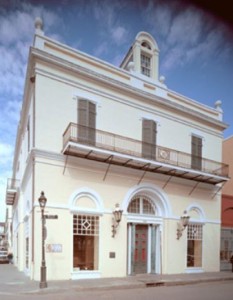
A good example of the French Quarter Townhomes is Latrobe's on Royal, designed by my one true love, Benjamin Henry Latrobe (Be still my heart).


LaTrobe is bringing the idea of 'Classical' proportions while maintaining the accessible nature of the area via the 'Carriage door'. The ceilings are high and vast, but the upstairs is removed and private.

Next there is the jewel of the Crescent City, St. Louis Cathedral on Jackson Square.

Frequenters of this blog will know that I give tours at "America's First Cathedral: The Baltimore Basilica." However, technically it's not true. St. Louis' was built in 1721 and while not initially distinguished as a 'Cathedral' it was a serious landmark for the citizens. The original design burned down in the fire of 1788 and a new church was built in 1789. It was afterwards designated as a Cathedral (1795). The Baltimore Basilica was not started until 1806, however, a technicality in timing allows Baltimore to slide in for the win, but just barely.

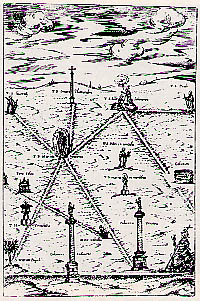
Original Design


The interior has all the working organs of any other Cathedral, apse, nave, transept, etc., What makes it interesting are the balconies. Unlike the Gothic churches on which this design is based, the second floor has deep porches that allow for less light, but more seating/standing space. This will make the stained glass much less impressive, but in a place with massive heat gain, it makes sense to have a little less light and much more in terms of wall decoration.

The higher windows also allow for better ventilation.

Finally, because it is one of the coolest spots in the city, there is the above ground cemetaries. Some would say that the graves are not architecture as much as they are an interpretation or mimicry of architecture. To that I say:


Booyah.

Cemetary #1 was started in 1789 after the aforementioned fire of 1788 ripped through the city. The idea of the above ground cemetary was adopted by the Spanish and made sense for two grisly reasons.

#1: The soil is basically playdough, so eventually the graves may come up, embarrasing the dead and freaking out the living, it's best to just avoid the whole thing.

#2: The mosoluems get so hot that people can litterally fry up in there, which basically creamates the bodies. Allowing for more people to be buried in the same plot. Convienient without being disrespectful.

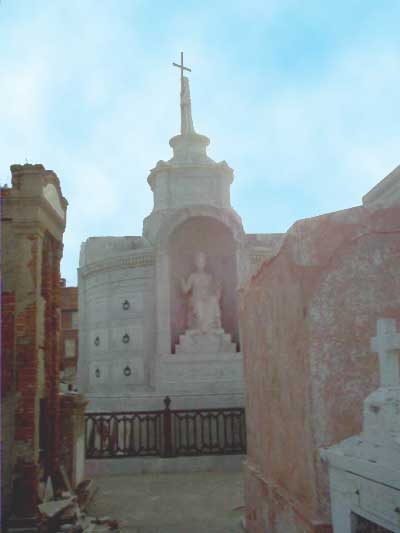
The layout of the cemetaries (especially #1) is meandering and a little confusing, but also strangely organized, a messy desk, but you know where you put that thing. The whole place is peaceful, poetic and inherently creepy, but in a charming way.


Like this lady right here. 

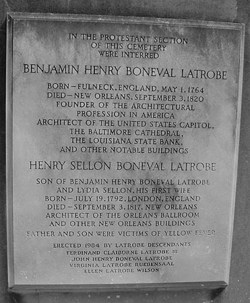
There are many interesting people who came to rest in this cemetary. Including, sadly,


Also, this guy, Barthelemy Lafon, who I think deserves another Love Letter...and soon.

So we've got the basics, but what is the Quarter really like? Like it's history, it's a lot of things to a lot of different people. Touristy? Sure. Charming? Yes, that's why there are so many tourists. Gross, dirty and wrong? Only if you want it to be. The French Quarter knows who she is. You can love her or leave her, but you never forget her.

Plus, everywhere you go has amazing music.

The only criticism I have of the French Quarter is that it is almost too perfect. Most of the homes are monitored closely to ensure their historic significance is preserved, so much so that it kills all chance of it evolving further. These places have survived in the truest sense of the word but will now be in a state of arrested development, creating a paradox of a place that is both experienced and untouched by time. Then again, maybe we overrate the new, after all, as Ignatius once said:
"Possession of anything new or expensive only reflected a person's lack of theology and geometry; it could even cast doubts upon one's soul"

NEXT TIME ON NEW ORLEANS: Plantations, Piazzas, Public Buildings and other things that go "bump" in the night. 

Sunday, June 24, 2012

Floodway, Fishway, Oilfield, Eden: New Orleans and Architecture Part 1

I love Summertime. The living is easy, fish are jumping and the cotton is high. In fact, if this post has a soundtrack it would kick-off like this:

PROLOGUE

To start at the beginning:

Cut to the summer of 2008.

I was on a road trip across the country that resulted in visiting the majority of states in these United. However, there were still four which had eluded my capture. They are as follows:

- Alaska
- Michigan
- Louisiana
- Rhode Island

Like the overweight pre-teen circa 1999 I secretly am, I have to catch'em all to feel complete.


Jump to 2012, I had an extra flight about to expire from a credit card I signed up about a year ago for and a friend who was in need of some distraction. So for completely selfish purposes, I decided we should to go to New Orleans. This friend of mine is the best breed of Foodie imaginable, as in she has cooked many excellent meals for myself and other such unworthy vagrants, asking nothing in return. This girl knows a good piece of grit cake when she sees it, therefore with her covering the food aspect, and myself on the sites of the city, we were ready to rock.

PART 1: 

The History of New Orleans: Spaniards, Frenchmen, Creole and Classy, Classy Americans. 

New Orleans has a long and complicated history. Before Europeans arrived, the area had been used for thousands of years by the native peoples of the Mississippi River. Most tour guides maintain the the French Quarter in particular is built on their burial ground.

 

First came the French (1718-1769) with a great deal of ambition and civic planning schemes, then came the Spanish (with maybe a little too much of the lingering inquisition tactics) (1769-1803) and lastly there were the Americans (1803-1861, 1865-Present), who by this time were generally considered to be 'weirdos' yet, had tons of money and were also, strangely, 'classy as hell'. What with their Northern sensibilities and WAY too many neck-ties. There is also the brief Confederate rule in New Orleans (1861-1865), but we'll get into that later.


The topography of New Orleans is like that of a shallow bowl. In the outlying areas, such as Oak Alley Plantation (one of the highest in the area) the elevation is only about 10' above sea-level, meaning that a large percentage of the city is naturally well below that point. Some have said that the unnatural aspect of being below the sea gives the city it's strange quality, like an Atlantis, just waiting to happen, however this theory is debatable. What is not debatable is that this particular problem, conceived hundreds of years ago and made worse by industrialization and use, is, was, and always will be a massive headache to the Army Corps of Engineers. 

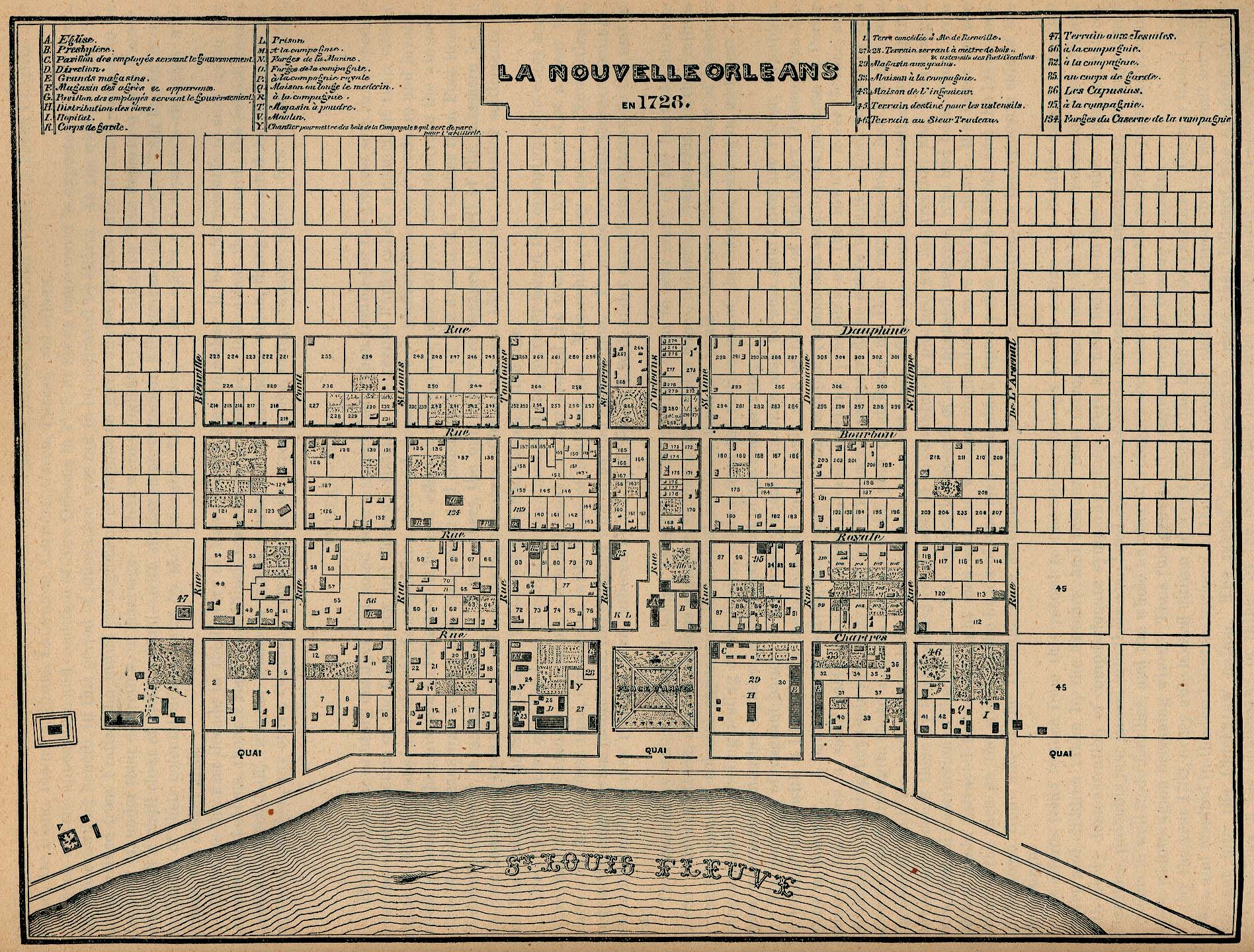
As for the layout of the city itself. The older aspects of the city are somewhat of a mish-mash of European planning ideas. There is the ever present grid, however unlike the neatly packed and far more rigid grid of cities like Philadelphia, the city blocks seemed to lean toward giving space to those who could afford it. There were large blocks with long linear plots, creating a courtyard that could be taken advantage of by all parties, or if you bought several plots, by yourself exclusively.


As the city grew, so did the grid. Eventually by 1888, there are a number of grids, which are based on the geometry of the river, which makes them somewhat contradictory in axis from one to the next.


  New Orleans has long been considered the "Least American" city of the United States. I both agree and disagree with this statement. To be 'American' is a deceptively complex subject (and one we have covered in earlier posts) however this assessment makes sense when you realize that this label has been self-applied.

New Orleans for a long time did not considered their population to be "American", while it is within the confines of the United States geography, there was a strong line between 'Creole' and 'American'.

So what is 'Creole'?

Like several concepts in Louisiana, particularly in New Orleans, 'Creole' can mean A LOT of different things.

Too complicated to explain here

The simplistic version is 'Creole' as it is referred to in New Orleans is people who are not tied to any particular nation as much as they are tied to the area. You could be Plaquemine, Natchez, French, Spanish, West African, whatever, and still be considered 'Creole' depending on the time you're talking about. Also apparently you need to know how to make a Roux

What does all this have to do with Architecture?

Not a whole lot, except that when a place is so different, coming from so many different influences the people will be different, so the structures that house them will be different as well. Unique, strange, seductive and well... you'll just have to come back for the rest.

Stay tuned for Part II of the New Orleans Trip: House and Hearth, Sinners and Saviors, Slaved and Enslaved.

Tuesday, March 20, 2012

I'm really more of a tea person.

Adventure calls me to the west coast this weekend. So in anticipation of that, let's take a look at the postcards from:

Coffee with an Architect

Postcards from Architects.
Postcards from Architects (part deux).

we're also throwing this one in. Because after speaking with the bricks as to what they want to be, there are too many to get a consensus.

Spoiler: Much like a high school drama department, they all say 'pay attention to me'

Sunday, March 18, 2012

The World is Lit by Lightning

It was a glorious day today, just...just beautiful.

So like the pilgrims of old, who left their homes after long, hard winters to refresh their minds, hearts and souls, I decided to go outlet shopping.

I wish it had put me worse mood. I really do. For some reason, it seems to be a detriment to my otherwise feminist objectives. But what can I say...

SHOPPING!


To counteract this vapid and superficial joy, I sought to do something more serious. Like watch "The Glass Menagerie". Sadly, not even Sam Waterson and Katherine Hepburn's depressing and poignant dialogue or the related unicorn murder could kill my great mood. NOT TODAY TENESSEE WILLLIAMS!

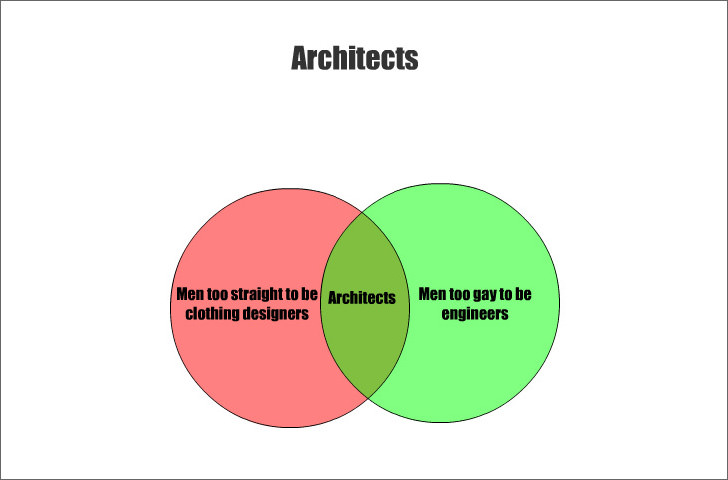
So as my happiness cannot be squashed by more cultural pursuits, it has been turned towards the display of architecture jokes. Because let's face it, most architects just aren't that funny.

To date, I think it may just be Robert Venturi. Still he's not even "ha-ha" funny. More like "oh how droll" funny. Ivy leagues. Whatevs. Of course there's always James Wines if you want to go wry.

But I digress.

Exhibit A:


Exhibit B:


Exhibit C (Which is more about construction):


Exhibit D:


reference!

Exhibit E:


More can be found here:
Because "adapting" (i.e. light intellectual property theft) is the essence of architecture
rawr!


Exhibit F:
Cabin Porn or...
oooh. damn you lookin so pine.


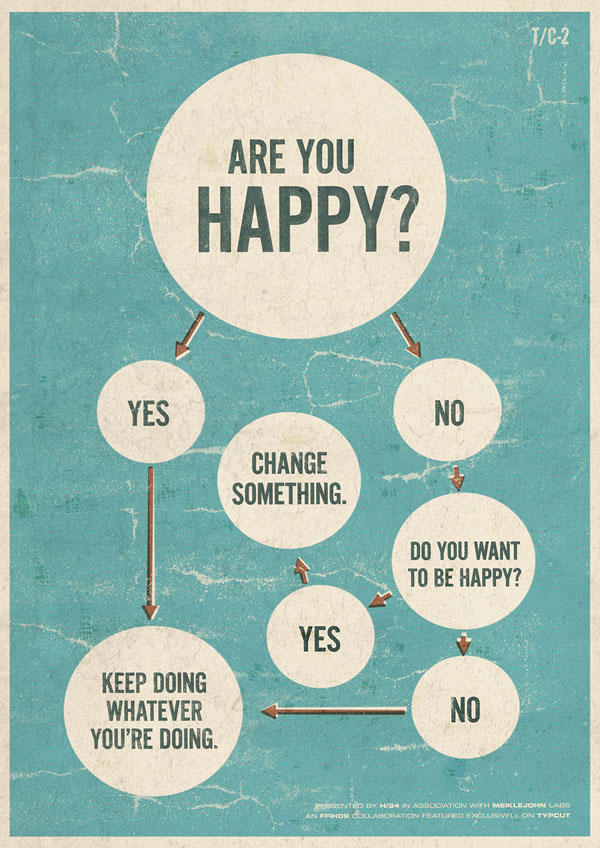
I suppose since we had a flow chart earlier, it's good to end with one as well:

Thursday, March 8, 2012

With blood on my collar, I wish it were mine. Less friends before me, and more left behind.

What is it like to be young and so full of potential that it's almost too intimidating to move forward? At what point does that possibility become a disappointment? 25? 30? 50? Who knows.

Architecture is an old person's game, and unlike the more glamorous fields it seems that your youth is for teeth cutting and general screw-up-ery instead of your "glory days".

Please excuse the next segment as it borders on both the insufferably philosophical and the embarrassingly physical.

A friend of mine, an actor in New York, made the statement that you cannot become a truly great actor until you have made passionate love to someone and have them break your heart in return. While not a literal translation, I think the same may hold true for architecture. There can be victory without defeat, no wisdom without foolishness and no success without failure. Still we fight on, backs to the past, always blazing forward.

It's a hard kind of learning. The kind that bruises, the kind that wounds, the kind that is not easily forgotten or forgiven.

The best example of this is probably in Frank Ghery


It always surprises non architectural friends to learn that for a long time, Ghery was considered in turns obtuse and ignorant by the architectural elite. I recall overhearing Peter Eisenman calling him "dumb" at a lecture only just a few years ago.

Despite this, Frank survived and persevered. Whatever your opinions may be of the deconstructivist showmanship he puts out, there is no denying that he helped change the game. The same is true for many visionary architects who had early failures, Frank Lloyd Wright, Robert Venturi, James Sterling.

So where does this put a young or aspiring architect? What is the right path? Do you fight for recognition among your colleagues? Do you nestle yourself amongst the game of pride that is academics? Or do you simply go rogue and decide you will get there when you damn well feel like it? How do you know if you're even any good? Doubt, it seems, becomes intrinsically connected with faith.

There is no correct answer. You don't win. You just decide not to lose.

With all that being said, I am probably going back to Graduate school in the next few months and with any decision of this magnitude you wonder if you are making the right choice.

As I am still obsessed with Game of Thrones (Season 2 starting on April 1st!) we'll let Maester Aegeon sum up my feelings.

Only time will tell, but should you not hear back in a year, It should be safe to say that you could find Retly Corm here.

Wednesday, September 21, 2011

Love Letters to Dead Architects: Of Telephones and Tyrants

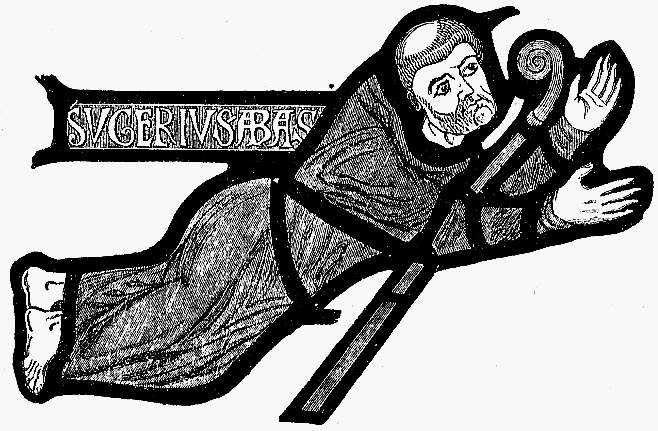
Abbot Suger,

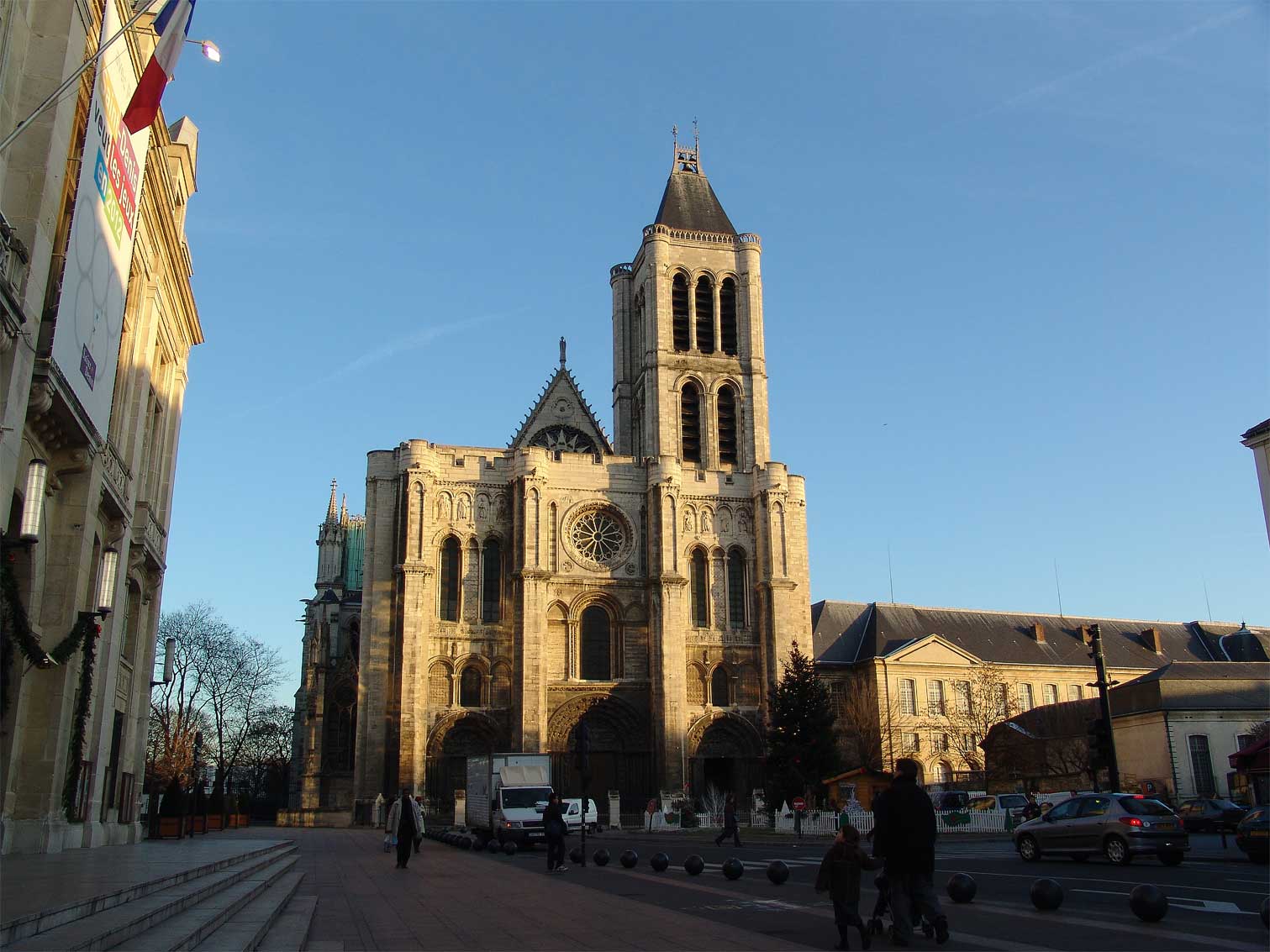
Greetings from a far. I have heard of the great comissioning of a great cathedral. Do you worry, sir, that it will be percieved the wrong way? That this wonderful new "Gothic" style will be taken as a showboating attempt? France cannot afford to lose face in these uncertain times. What with sexy and violent English monarchs seducing the hell out of our dear French
queens and then unfortunetly being very good at fighting, it is now more that ever we should forget our petty politics and focus on the greater goals. Then again, I may be wrong, your attempts may be, in earnest, for the glory of God and the saving of souls. Surely a Catherdral filled with the majesty of pure light would never be taken as a giant 'we're better than you' to England. What with their craggly, boorish and brutal castles. This catherdral is a step towards the future, a step out of chaos, a step for France.

With love,

Retly Corm


Daaaaaaaaymn Louise Blanchard Bethune, you fine.

yo. yo. yo. girl lemme get your number...come on gurl the telephone was only invented last year...so what's yo number..1?2?3?4? 5? oh...it's 5 isn't it. Well don't worry..I'll just keep trying numbers 'til I find you. So what you doin' here? Drafting? Damn girl..not a lot of ladies do that..in fact you are the first fine piece of lady meat I have ever seen professionally following an architectural career. I like it. Independant ladies.
Making money..huh? 'Your compensation is unfairly poor'. You KNOW that ain't right. So you got a boyfriend? Is he big? Is he coming back soon? You married? you are. you work with him. Then you must need a break. Shiiiiii girl you gimme your number I promise I won't call it all the time, just when little mama needs a break you know. Oh you gotta go..well that's cool. I'll be here tomorrow to look at your lovely face..girl you filling out that hoop skirt.

- Retly Corm

Monday, September 12, 2011

Preview: You can't buy me love, but I will fight you for free

Hold on to your hats boys and girls: Love Letters to Dead Architects will be making a return sometime this month. I was recently given a marvelous gift which reminded me there are still some really important architects who I have completely glossed over.

http://www. neatoshop.com/product/Rulers-of-Architecture

Also: should you ever be in the charming city that reads, Baltimore, on a Monday morning stop by the Baltimore Basilica for an architecture tour from someone who is, quite possibly, the world's laziest Catholic. (yours truly, who is, truly yours)

I will tell you tales of nationwide excommunication, rigged lotteries, professional jealousy, political agendas, persecution, fire, war and ARCHITECTURE.

Wednesday, April 27, 2011

Love Letters to Dead Architects: Sinners, Saints, Slobs, Salesmen

Well, well, well, if it isn’t Asher Benjamin,

So how does it feel to be the Betty Crocker of the Architectural World? Now. Don’t look at me like that (I know you are), I don’t mean to be condescending. Think about it, your books have made it possible for those who don’t have access to any academies or ecoles to aspire to architecture greater than that of necessity.

Additionally, about these detail drawings you’ve included - understandable, well drafted, and beautiful - which is all I will say about the matter.

In many ways, you’re not to far from Andrea Palladio (Don’t gasp at my blasphemy, it does’nt suit you.) I knew him, a long, long time ago. You would have liked him and I imagine he would have felt the same way about you.

While I wish you had truly spread your horizions beyond the idyllic and the rural when it came to your “architectural how-to” book. I can do nothing but congratulate you.

Therefore I must leave now, unless I appear to be gushing with praise.

Yours ever,

Retly Corm


Erich Mendelsohn,

I can’t get you off my mind. All those curves in the Einstein Tower? All those Triangles in the Luckenwalde Hat Factory? The perfect composition that is the Red Flag Textile factory. It’s enough to make a person blush. It’s like the material has melted, a northern and modern evolution of Gaudi. But still, you’re so much more than that…

Question: Do you know how hard it is to find someone who is both smart and fun to be around?

Answer: It’s really hard.

You must know this. You’re surrounded by scientists…scientists who play the cello, I’m sure they’re nice, I’m just saying. I’ve also know scientists who play instruments and most of them were insufferable.

With Love,

Retly Corm


Dear Pierre Cuypers,

I can tell you are the kind of man who you don’t mess around with. So let me just go ahead and confess what we both know: I’m nothing but a sinner.

I was raised with good principles, but traveling the world and wanting the presence and presents of all manner of rakes and rascals, well one cannot stay immune forever. I’m not sure I want to be saved, but when I look at your Gothic Rijksmuseum Amsterdam, I get a feeling I’ve not had in years. Maybe the apotheosis your architecture gives to all the Rembrandts and Vermeers, maybe it’s because it reminds me of a strict religion that I have rebelled against for a long time. Whatever it is, it’s tangible.

Guardedly yours,

Retly Corm


Dear Konstantin Andreyevich Thon,

Don’t give me those romantic-poet-puppy eyes. You know what you did. You can’t just throw me to the dogs to save your skin at dinner parties. Listen, I know you’re scared. I would be too. You’re a Russian artist who supports the Tzar.

To be perfectly honest Konstantin, I’m not sure how well it’s going to work out for you – People in your position traditionally have a tendency to have their careers end tragically. You may get lucky though; you may be respected, loved even, after you are gone. My advice? Throw yourself into the future, get behind the latest construction techniques, design a train station, get involved in a big way. At least then, when the revolutionaries take over, you may be seen as an innovator, rather than a relic icon. Then again, Russians like those too.

With Love,

Retly Corm


Dear Frederick Law Olmsted

Remember when we were talking a while back, you said you wanted to start some trouble? I do.

Well, on that point, Andrew Jackson Downing was crazy talking about some huge park in the middle of the city. I know the partying has worn off by now, but I think he may actually have something there.

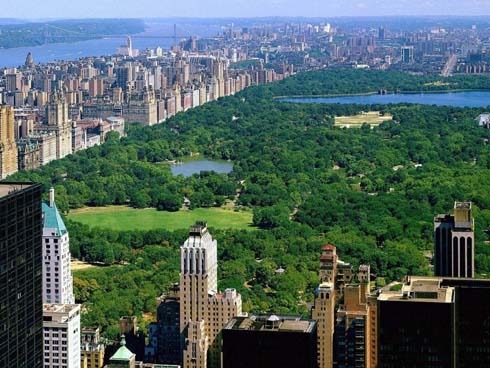
We can stick it to those New York money based pragmatists once and for all. Now’s the time, let’s go ahead and take over 800 acres on the island, make a park so beautiful they can’t tear it down. No matter how much they whine, people will love it and they’ll be stuck. I already called Calvert Vaux, he’ll be over about noon.

You start drafting; I’m going to pull together some hush money.
Chop Chop!

Best,

Retly Corm.


Hey there Ed Bacon,

So…I can’t help but notice that you haven’t called.

I would be mad, but I know that you’re busy. You’ve got a lot on your plate, so I’ll be empathetic. I mean here you are, doing your damndest to take a cluttered, claustrophobic city and really do something worth while.

Instead of just looking at a grid and saying “Yup. There you go.” You look beyond that, into the special and spatial needs of a place. Indeed, I can’t help but get a little sentimental about your commitment to human interaction on an urban scale. Color and perception, the man made and the natural, it all weaves together to form a whole. Yet, as architects and planners we can still control it, still shape our world for the better.

While your ideas are clear and simple they’re getting muddled up by poets and politicians who can’t see past their own egos. You care about more than yourself. It’s why I think I may love you.
Stay bad-ass Ed.

With Love,

Retly Corm


Dear Andrew Jackson Downing,

When I first heard you speak on the subject of personal gardens, I thought

“Ok. So I’m supposed to take care of my property not because it benefits me financially but because it makes me a better person? That’s cute.”

Maybe I’ve been too cynical, I’ve seen a lot hopeful people and brilliant ideas get crushed by indifference and sloth. But you’re different, you’re not advocating gardens just for the rich. I’m hearing that you want every person to have a chance to have a little piece of paradise of your own? How novel. How republican. How…noble.

This plan of “landscape architecture” might actually be crazy enough to work.

Yours (turns out) truly,

Retly Corm


Dear William Van Alen,

Ok. So they say the Chrysler Building lacks depth of meaning in its design. Well guess what nerds, it’s awesome. All the details reference it’s inspiration, if that’s not depth, I don’t want to know what is.

You know what lacks depth? All this neo-this, revival-that nonsense, just because it’s inspired by something ancient, doesn’t mean it’s good.

You know what else was a bunch of flash and pop and dazzle? Anything Baroque. Ever.

Listen, they’re all ready to cry themselves to sleep over Bernini but they can’t recognize a similar kind of genius in their own age. Don’t worry Bill, you know and I know one of these days they’ll be kicking themselves.

Plus, who needs them? People love the hell out of your building.

I do too.

Love,

Retly Corm


Ralph Knott,

Remember, my dearest boy, where you came from. You may be living a beautiful life, falling in love, charming the people, inventing the “Edwardian Baroque”. I know there’s nothing you’re trying to be besides a great architect. But I want to warn you, some people will only ever see you as a prentender. Before you start, I know, the County Hall building for London County Council broke barriers, structurally, aesthetically, I know. I’m just saying.

The fact is you’re the son of a tailor from Dorset. That is’nt a bad thing, it’s just the truth. Hey, Turner’s father was a wig-maker. Own it. Make it the reason why you are as great as you are.

Affectionately yours,
Retly Corm


Dear Jay Sarno,

Really? REALLY? Ceasar’s Palace? That’s what you decided to call it? I think maybe Caligula would have made more sense. No. That would have been seedy.

Ok. Now that’s out of my system.

I’d be mad at you, but damnit if it doesn’t work.
Maybe that’s why you’re in the casino business and I’m in…whatever it is that I do.
You know, when you think about it, the architecture may not be “sophisticated” or “intellectual” you were able to do what thousands, maybe tens of thousands of architects wish they could – create an entire world in your own vision.

Say what you will about design intent, you have to respect that kind of gumption.
Best Regards,

Retly Corm


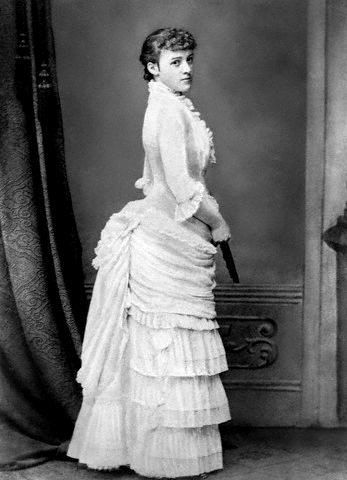
Edith Wharton,

Kudos on setting some standards in this town, there is this common and popular idea currently that the more objects you have, the better off you are. We both know this is simply untrue. The more junk in the window, the less likely you are to appreciate the flowers and the trees. This whole movement is aestheticism run amok (I’m looking at YOU James Whistler, you started all this nonsense).

I just hope that the intent of the work is made clear in its reading. I know you do not mean to be condescending or snobbish regarding the correct and incorrect way. But someone has to tell them, and if not us then whom?

Best,

Retly Corm


Elise De Wolfe.

Enough of this cat-and-mouse-game. I cannot stand to be away from you any longer. Not only does your beauty shine like the sun, but you bring light into the gloomiest and darkest corner of my mind and glum Victorian houses.

You truly are “a rebel in an ugly world.”

Everyone will say of Lady Mendl, long after we both are gon that she wanted to world to be honest especially to itself. Not everyone is as brave. Please come away with me. We can be honest, simple and sophisticated. We can do cartwheels all day in fine evening gowns and we will never once hear the clucking of teeth. Not that we care anyway.

I’ll wait. Not forever.

With Love,

Retly Corm