
Tuesday, March 27, 2012

Tuesday, March 20, 2012
I'm really more of a tea person.
Adventure calls me to the west coast this weekend. So in anticipation of that, let's take a look at the postcards from:
Coffee with an Architect
Postcards from Architects.
Postcards from Architects (part deux).
we're also throwing this one in. Because after speaking with the bricks as to what they want to be, there are too many to get a consensus.
Spoiler: Much like a high school drama department, they all say 'pay attention to me'
Coffee with an Architect
Postcards from Architects.
Postcards from Architects (part deux).
we're also throwing this one in. Because after speaking with the bricks as to what they want to be, there are too many to get a consensus.
Spoiler: Much like a high school drama department, they all say 'pay attention to me'
Sunday, March 18, 2012
The World is Lit by Lightning
It was a glorious day today, just...just beautiful.
So like the pilgrims of old, who left their homes after long, hard winters to refresh their minds, hearts and souls, I decided to go outlet shopping.
I wish it had put me worse mood. I really do. For some reason, it seems to be a detriment to my otherwise feminist objectives. But what can I say...
SHOPPING!

To counteract this vapid and superficial joy, I sought to do something more serious. Like watch "The Glass Menagerie". Sadly, not even Sam Waterson and Katherine Hepburn's depressing and poignant dialogue or the related unicorn murder could kill my great mood. NOT TODAY TENESSEE WILLLIAMS!
So as my happiness cannot be squashed by more cultural pursuits, it has been turned towards the display of architecture jokes. Because let's face it, most architects just aren't that funny.
To date, I think it may just be Robert Venturi. Still he's not even "ha-ha" funny. More like "oh how droll" funny. Ivy leagues. Whatevs. Of course there's always James Wines if you want to go wry.
But I digress.
Exhibit A:

Exhibit B:

Exhibit C (Which is more about construction):

Exhibit D:


reference!
Exhibit E:

More can be found here:
Because "adapting" (i.e. light intellectual property theft) is the essence of architecture
rawr!
Exhibit F:
Cabin Porn or...
oooh. damn you lookin so pine.

I suppose since we had a flow chart earlier, it's good to end with one as well:

So like the pilgrims of old, who left their homes after long, hard winters to refresh their minds, hearts and souls, I decided to go outlet shopping.
I wish it had put me worse mood. I really do. For some reason, it seems to be a detriment to my otherwise feminist objectives. But what can I say...
SHOPPING!

To counteract this vapid and superficial joy, I sought to do something more serious. Like watch "The Glass Menagerie". Sadly, not even Sam Waterson and Katherine Hepburn's depressing and poignant dialogue or the related unicorn murder could kill my great mood. NOT TODAY TENESSEE WILLLIAMS!
So as my happiness cannot be squashed by more cultural pursuits, it has been turned towards the display of architecture jokes. Because let's face it, most architects just aren't that funny.
To date, I think it may just be Robert Venturi. Still he's not even "ha-ha" funny. More like "oh how droll" funny. Ivy leagues. Whatevs. Of course there's always James Wines if you want to go wry.
But I digress.
Exhibit A:

Exhibit B:
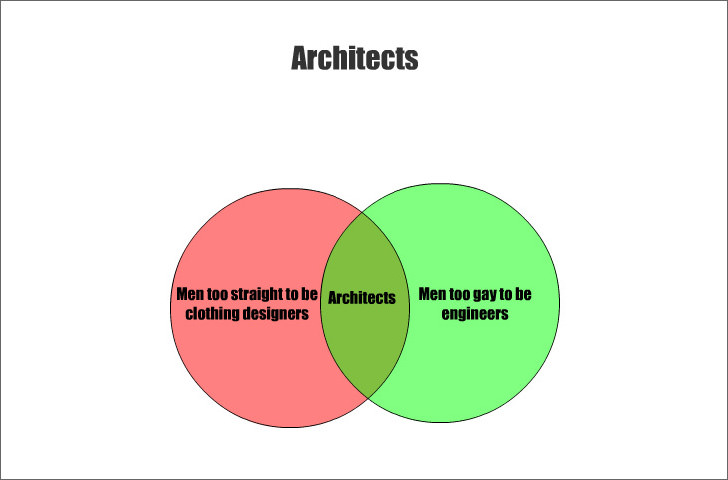
Exhibit C (Which is more about construction):

Exhibit D:


reference!
Exhibit E:

More can be found here:
Because "adapting" (i.e. light intellectual property theft) is the essence of architecture
rawr!
Exhibit F:
Cabin Porn or...
oooh. damn you lookin so pine.
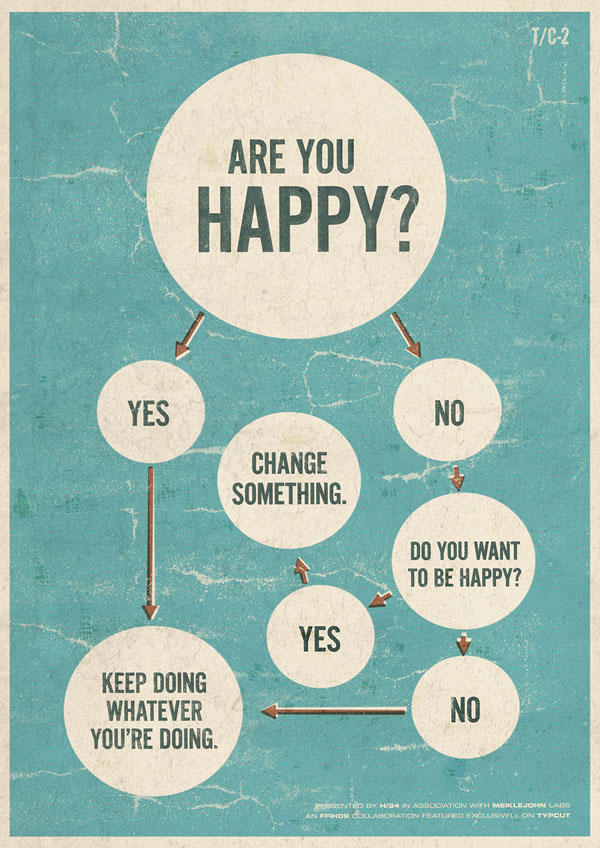
I suppose since we had a flow chart earlier, it's good to end with one as well:
Wednesday, March 14, 2012
Thursday, March 8, 2012
With blood on my collar, I wish it were mine. Less friends before me, and more left behind.
What is it like to be young and so full of potential that it's almost too intimidating to move forward? At what point does that possibility become a disappointment? 25? 30? 50? Who knows.
Architecture is an old person's game, and unlike the more glamorous fields it seems that your youth is for teeth cutting and general screw-up-ery instead of your "glory days".
Please excuse the next segment as it borders on both the insufferably philosophical and the embarrassingly physical.
A friend of mine, an actor in New York, made the statement that you cannot become a truly great actor until you have made passionate love to someone and have them break your heart in return. While not a literal translation, I think the same may hold true for architecture. There can be victory without defeat, no wisdom without foolishness and no success without failure. Still we fight on, backs to the past, always blazing forward.
It's a hard kind of learning. The kind that bruises, the kind that wounds, the kind that is not easily forgotten or forgiven.
The best example of this is probably in Frank Ghery
It always surprises non architectural friends to learn that for a long time, Ghery was considered in turns obtuse and ignorant by the architectural elite. I recall overhearing Peter Eisenman calling him "dumb" at a lecture only just a few years ago.
Despite this, Frank survived and persevered. Whatever your opinions may be of the deconstructivist showmanship he puts out, there is no denying that he helped change the game. The same is true for many visionary architects who had early failures, Frank Lloyd Wright, Robert Venturi, James Sterling.
So where does this put a young or aspiring architect? What is the right path? Do you fight for recognition among your colleagues? Do you nestle yourself amongst the game of pride that is academics? Or do you simply go rogue and decide you will get there when you damn well feel like it? How do you know if you're even any good? Doubt, it seems, becomes intrinsically connected with faith.
There is no correct answer. You don't win. You just decide not to lose.
With all that being said, I am probably going back to Graduate school in the next few months and with any decision of this magnitude you wonder if you are making the right choice.
As I am still obsessed with Game of Thrones (Season 2 starting on April 1st!) we'll let Maester Aegeon sum up my feelings.


 Only time will tell, but should you not hear back in a year, It should be safe to say that you could find Retly Corm here.
Architecture is an old person's game, and unlike the more glamorous fields it seems that your youth is for teeth cutting and general screw-up-ery instead of your "glory days".
Please excuse the next segment as it borders on both the insufferably philosophical and the embarrassingly physical.
A friend of mine, an actor in New York, made the statement that you cannot become a truly great actor until you have made passionate love to someone and have them break your heart in return. While not a literal translation, I think the same may hold true for architecture. There can be victory without defeat, no wisdom without foolishness and no success without failure. Still we fight on, backs to the past, always blazing forward.
It's a hard kind of learning. The kind that bruises, the kind that wounds, the kind that is not easily forgotten or forgiven.
The best example of this is probably in Frank Ghery
It always surprises non architectural friends to learn that for a long time, Ghery was considered in turns obtuse and ignorant by the architectural elite. I recall overhearing Peter Eisenman calling him "dumb" at a lecture only just a few years ago.
Despite this, Frank survived and persevered. Whatever your opinions may be of the deconstructivist showmanship he puts out, there is no denying that he helped change the game. The same is true for many visionary architects who had early failures, Frank Lloyd Wright, Robert Venturi, James Sterling.
So where does this put a young or aspiring architect? What is the right path? Do you fight for recognition among your colleagues? Do you nestle yourself amongst the game of pride that is academics? Or do you simply go rogue and decide you will get there when you damn well feel like it? How do you know if you're even any good? Doubt, it seems, becomes intrinsically connected with faith.
There is no correct answer. You don't win. You just decide not to lose.
With all that being said, I am probably going back to Graduate school in the next few months and with any decision of this magnitude you wonder if you are making the right choice.
As I am still obsessed with Game of Thrones (Season 2 starting on April 1st!) we'll let Maester Aegeon sum up my feelings.


 Only time will tell, but should you not hear back in a year, It should be safe to say that you could find Retly Corm here.
Tuesday, March 6, 2012
ARE: Site Planning & Design
In spite of the fact that this exam has the highest pass rate overall at 76%, I feel the least confident about my performance on this one. Unfortunately, I let other things get in the way of my studying - I may have only put in 10 hours for this one. I did not study from anything beyond the Kaplan and Ballast study guides. Usually, I try to do a quick review of pertinent codes or whatever other major industry standard book is recommended by NCARB. This time, however, I did not.
I think I should have spent more time preparing for the vignettes as well. For some reason the grading one trips me up - I feel like on the one hand you want to make smooth curves, but on the other hand the more you move the lines the more it sounds that you could be docked for disturbing the site. I guess I just don't feel that tweaking topography lines is as literal as they are making it with this particular exam. Does anyone really go out to a site afterwords to verify that every square inch of grass is between 2% and 20% grade? I have never seen it. But, that's besides the point with these exams!
Anyway, in conclusion (so you may get some use out of this post), I would recommend going hardcore with the vignettes. Do the NCARB ones and try like 3 of each of whatever other practice ones you can get. If I have to retake this again in six months, I'm going to do every practice vignette I can find.
Multiple choice-wise, I would say brush up in the codes section, you never know which piece of code they're going to ask you and you don't have a lot of questions in the section so each answer has a lot of weight.
I think I should have spent more time preparing for the vignettes as well. For some reason the grading one trips me up - I feel like on the one hand you want to make smooth curves, but on the other hand the more you move the lines the more it sounds that you could be docked for disturbing the site. I guess I just don't feel that tweaking topography lines is as literal as they are making it with this particular exam. Does anyone really go out to a site afterwords to verify that every square inch of grass is between 2% and 20% grade? I have never seen it. But, that's besides the point with these exams!
Anyway, in conclusion (so you may get some use out of this post), I would recommend going hardcore with the vignettes. Do the NCARB ones and try like 3 of each of whatever other practice ones you can get. If I have to retake this again in six months, I'm going to do every practice vignette I can find.
Multiple choice-wise, I would say brush up in the codes section, you never know which piece of code they're going to ask you and you don't have a lot of questions in the section so each answer has a lot of weight.
Sunday, March 4, 2012
Completing IDP
This morning I submitted my final work experience into IDP e-EVR to fulfill the training requirements portion of IDP. I heard or read somewhere that NCARB will automatically forward your NCARB record to the state once you have completed all of the jurisdiction's IDP requirements, and after that you just have to wait until the board receives all of your exam scores. I'm searching for documentation of this somewhere.... stay tuned.
I was reading through the PA requirements for an initial license and I found some fees I wanted to share. It appears there is $40 fee for the application for initial license in PA, followed by a $15 fee for license certification/verification and a $25 fee for certification of exam scores.
It also says, however that there is a $30 fee for "processing exam applications." I'm not quite sure what that means - I'm interpreting it as a fee you pay when you are requesting your Authorization To Test. I have not yet received a bill for this, so maybe all these charges come to you at the end right before you receive your initial license?
Not sure, will have to post a response to these questions later after I get through it all.
The one thing that is a little troubling about the e-EVR reporting system is that it does not provide information anywhere about how NCARB quantifies the durational requirement portion of IDP. If they go from start date at a firm to end date at a firm, I think I will be at the 3 year mark by the end of April. If they count every day you log hours for, including weekends, I may be behind by a little bit because I didn't always lap my reporting periods exactly where the previous one left off. It would be nice if in addition to quantifying all the training hours you have, they would quantify the duration of your internship as well.
I was reading through the PA requirements for an initial license and I found some fees I wanted to share. It appears there is $40 fee for the application for initial license in PA, followed by a $15 fee for license certification/verification and a $25 fee for certification of exam scores.
It also says, however that there is a $30 fee for "processing exam applications." I'm not quite sure what that means - I'm interpreting it as a fee you pay when you are requesting your Authorization To Test. I have not yet received a bill for this, so maybe all these charges come to you at the end right before you receive your initial license?
Not sure, will have to post a response to these questions later after I get through it all.
The one thing that is a little troubling about the e-EVR reporting system is that it does not provide information anywhere about how NCARB quantifies the durational requirement portion of IDP. If they go from start date at a firm to end date at a firm, I think I will be at the 3 year mark by the end of April. If they count every day you log hours for, including weekends, I may be behind by a little bit because I didn't always lap my reporting periods exactly where the previous one left off. It would be nice if in addition to quantifying all the training hours you have, they would quantify the duration of your internship as well.
Subscribe to:
Comments (Atom)